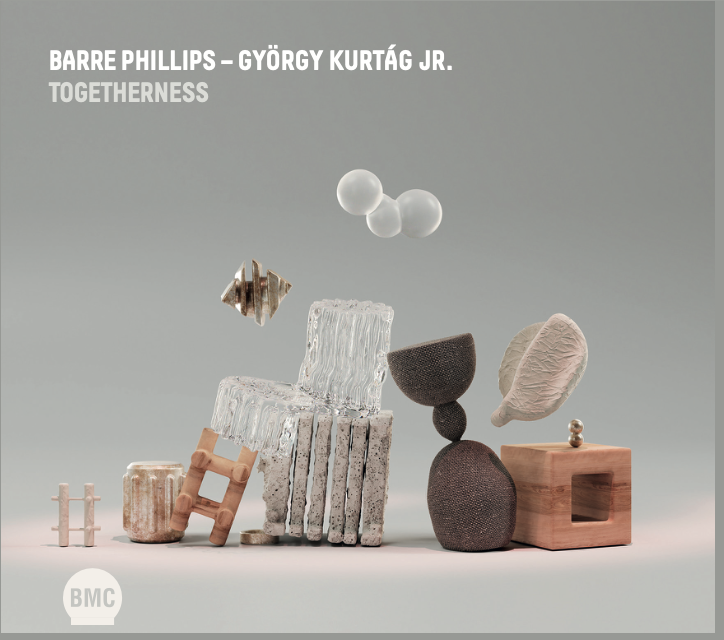


Barre Phillips/György Kurtág Jr. “Ebb & Flood” Togetherness (BMC)
In 2014, bassist Barre Phillips and electronic sound artist György Kurtág Jr. celebrated their birthdays — Phillips’ 80th, Kurtág’s 60th — with an improvisational duo concert at BMC Opus Jazz Club in Budapest. The pair showcased a powerful synergy honed over a decade, drawing from the directives of the European Center for Improvisation co-founded by Phillips (and subsequently headed by Kurtág), as well as from their previous duo album, 2020’s Face à Face on ECM. Fortunately, the concert was recorded and is now being released in edited form, albeit posthumously for Phillips, who died in 2024 at the age of 90. A remarkable program of instantly composed works reveals the deep communicative powers of the participants, as illustrated by the brief vignette “Ebb & Flood.” Phillips scrapes bow across strings, evincing an almost industrial sound over subtle electronic textures supplied by Kurtág. This gives way to the organic sound of fingers on strings, as Phillips weaves a moody, melancholic reflection, made all the more stark by the sounds of the surf, at first lapping gently then growing more insistent. The bassist, who was born in San Francisco but lived for decades in France, worked alongside some of the most adventurous figures in jazz, including Eric Dolphy, Archie Shepp, Marion Brown and Ornette Coleman. Kurtág, the son of the famed Hungarian composer whose name he shares, founded a computer music lab at the University of Bourdeux and continues to pursue new methods of music pedagogy.
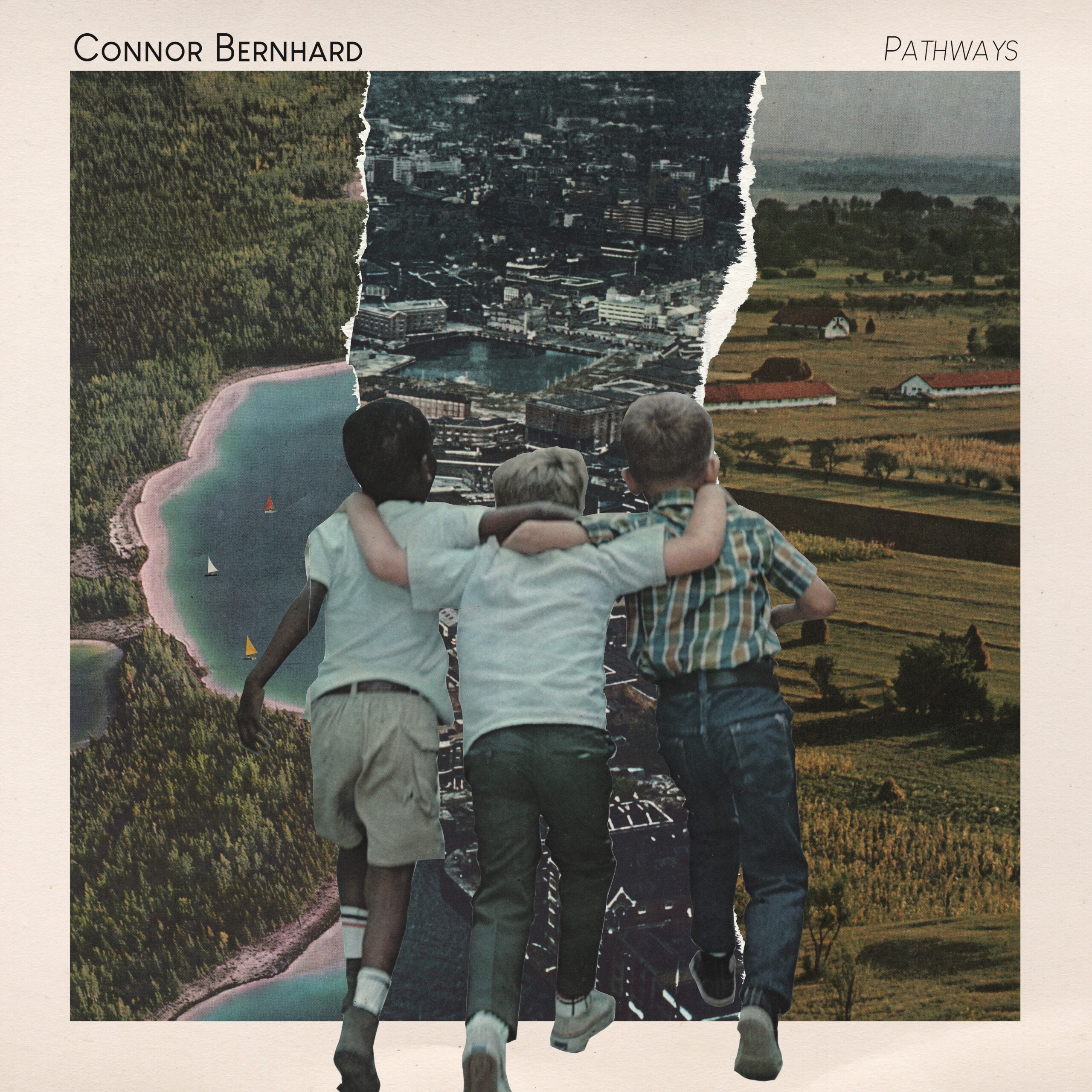
Connor Bernhard “Jackalope” Pathways (self-released)
When Connor Bernhard moved to Chicago in 2013, he supported his dream of playing music full-time by working as a merchant marine. Then, in 2017, the trumpeter and composer was a finalist in an annual jazz competition, which earned him a grant from the Luminarts Foundation. This enabled him to fund his debut recording as a leader, 2020’s Altitude. Bernhard’s sophomore release, Pathways, finds him leading a tight quintet on original material and a few covers — including the Bobby Timmons’ hard-bop classic “Dat Dere” — that reveal his roots and inspirations. He also draws from personal experiences, as on the rousing opener “Jackalope.” As Bernhard explains, during a family trip when he was a youngster, he spied a novelty wall hanging of the mythical creature at a drug store in South Dakota; apparently, the image stuck with him all these years. Imagining how the hare with horns might have darted through the high grass, the trumpeter takes off at high speed, kicking off the tune with a frenzied fanfare. His bandmates catch up and lay down a loping 12/8 rhythm behind Bernhard’s bravura blowing. Guitarist Jeff Swanson and pianist Julius Tucker provide bright comps that provide color and propulsion alongside Evan Salvacion Levine’s rich-toned bass lines and Clif Wallace’s swift and supple drumming. Ensconced on the Chicago jazz scene, Bernhard planned to hold the record release party for Pathways in April at the city’s famed Jazz Showcase.

Ian Dogole “Africa” The Last Trane to Africa (Global Fusion Music)
While still in high school, Ian Dogole became transfixed by Miles Davis’ Bitches Brew. Tumbling down the rabbit hole, he dived into the music of Davis, as well as John Coltrane, and followed them through the looking glass into the avant worlds of Sun Ra, Pharoah Sanders and Cecil Taylor, among others. Decades later, the veteran Bay Area percussionist pays tribute to one of his early heroes with The Last Trane to Africa, an exploration of Coltrane’s deeply spiritual and globally spanning music, which reaches into African, Indian and Middle Eastern realms that have long fascinated Dogole, as well. Aptly, he and his ensemble launch the album with “Africa,” an epic cut from Coltrane’s 1961 classic Africa/Brass. The leader opens the track with a percussive barrage, creating tension and mystique with ancient instruments such as djembe and African talking drum. He maintains and builds on that momentum as the ensemble enters, with tenor saxophonist Richard Howell conjuring (but not imitating) Coltrane, pianist Frank Martin echoing the muscularity of pianist McCoy Tyner and bassist Fred Randolph pulling rich, resonant tones from his bass strings. Soprano saxophonist Sheldon Brown also joins in, at first on the horn chorus, then with a fiery solo that follows Martin’s no-less urgent, Tyner-esque solo. It’s easy to hear the passion Dogole — and likely all these musicians — still harbors for Coltrane’s music.
Janel Leppin Ensemble Volcanic Ash “Pluto in Aquarius” Pluto in Aquarius (Cuneiform)
Cellist-composer Janel Leppin is a creative dynamo. Among the various projects that keep her hopping are her duo, Janel and Anthony, with guitarist and husband Anthony Pirog; her more pop-oriented group Mellow Diamond; her solo work; and her Ensemble Volcanic Ash, a quintet comprising avant-garde heavies from the Washington, D.C., area. In fact, in conjunction with the release of a new solo album (Slowly Melting), Leppin is also rolling out her third album with Volcanic Ash, the sonically challenging and politically pointed Pluto in Aquarius. The cellist composed the material during the run-up to the 2024 election, “so you’ll hear a lot of hopefulness here,” she says, “as well as, of course, a lot of tension.” The album’s title refers to an astrological moment, a period of transition and “radical change” marked by “reshaping power dynamics, technology, inequality and more.” Aptly, the album’s title track reflects a sense of unease, opening with a call and response between Luke Stewart’s rumbling bass lines and his ensemble mates. Saxophonist Brian Settles’ unsettling tones, Pirog’s textured guitar lines, Larry Ferguson’s martial drum beat and Leppin’s fuzz-toned cello express a profound melancholy, but the fire and crunch seem to signify more resistance than resignation. While other tracks express anger (the ICE-inspired “Cruel Motherfuckers”) and elegy (“Susan Was a Warrior,” dedicated to the late pedal-steel virtuoso Susan Alcorn), Leppin realizes what it will take to survive this mean season in our nation’s history, which is alluded to in the track “Hope Marathon.”
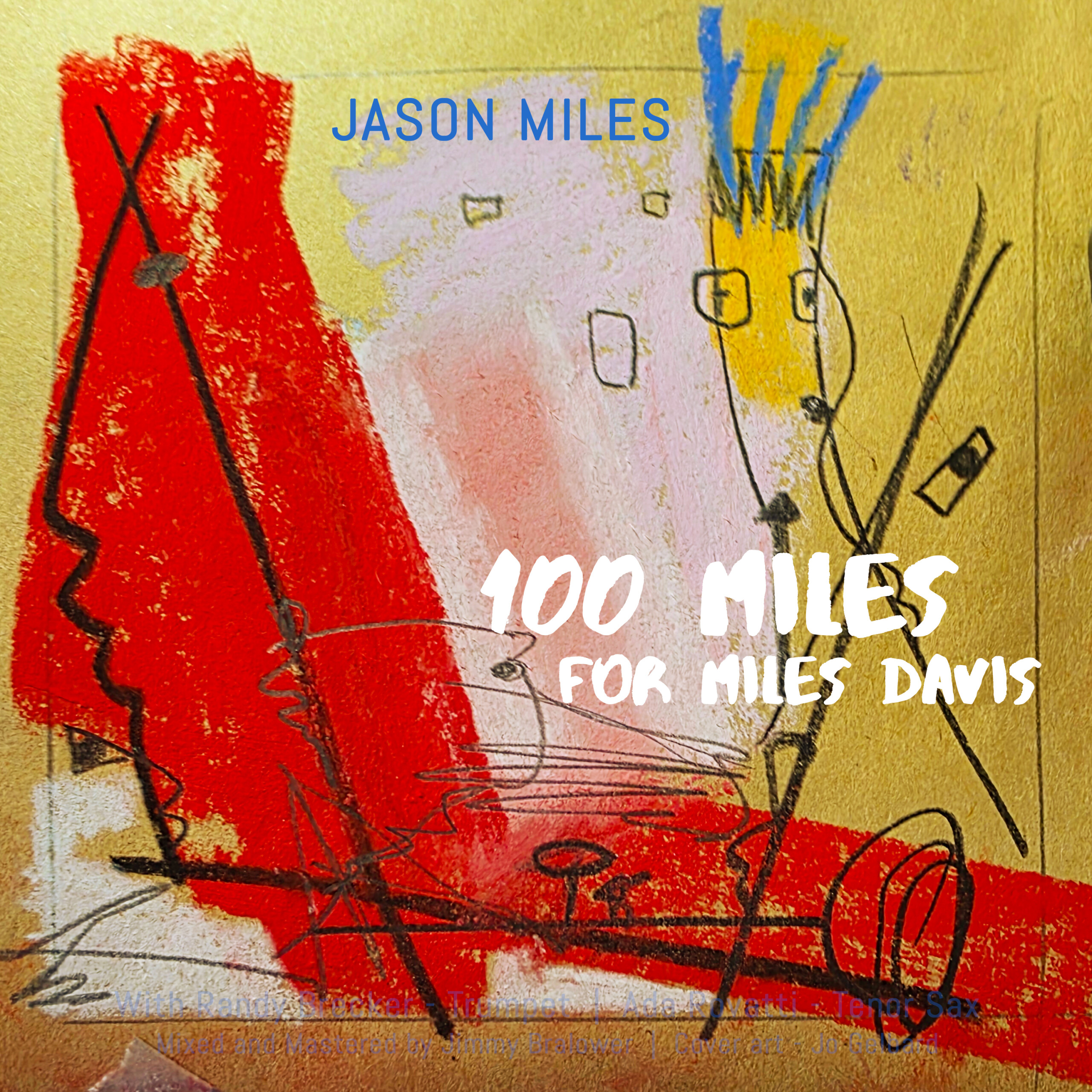
Jason Miles “100 Miles” 100 Miles for Miles Davis (Lightyear/Virgin)
Keyboardist, composer and producer Jason Miles played an important role in shaping Miles Davis’ latter-day sound, providing sonic guidance on the albums TuTu, Music From Siesta and Amandla. Of course, Davis’ impact on Miles proved indelible, as well, and Miles has frequently paid tribute, on stage and in the studio, to one of his most profound influences, who died in 1991. Miles’ latest recording, 100 Miles for Miles Davis, celebrates the trumpeter’s centennial (May 26) with a quite personal program that draws on their intergenerational friendship and musical partnership. The opening title cut is an exuberant evocation of the sounds of the era in which they collaborated, but updated for a new millennium. Trumpet great Randy Brecker conjures the wickedly playful essence of Davis, his fiery brass undergirded by Miles’ percolating keyboard comps, dramatic electronic flourishes and the dynamic rhythmic propulsion of bassist Yami Aloelela, guitarist Tiago Oliveira and drummer Vicky Marques (members of Miles’ Lisbon Electric 4-tet). Tenor saxophonist Ada Rovatti Brecker provides respite with her cool interludes, and she also engages in some heated exchanges with husband Randy a little further in. Based in Portugal for the past few years, Miles musically recalls experiences such as meeting Prince at a Davis birthday party (“The Girl With Purple Hair”) and entering Davis’ apartment, in which the blare from TVs, radio and drum machine loops created sonic mayhem (“Controlled Chaos”). It’s all presented with undimmed affection and excitement.
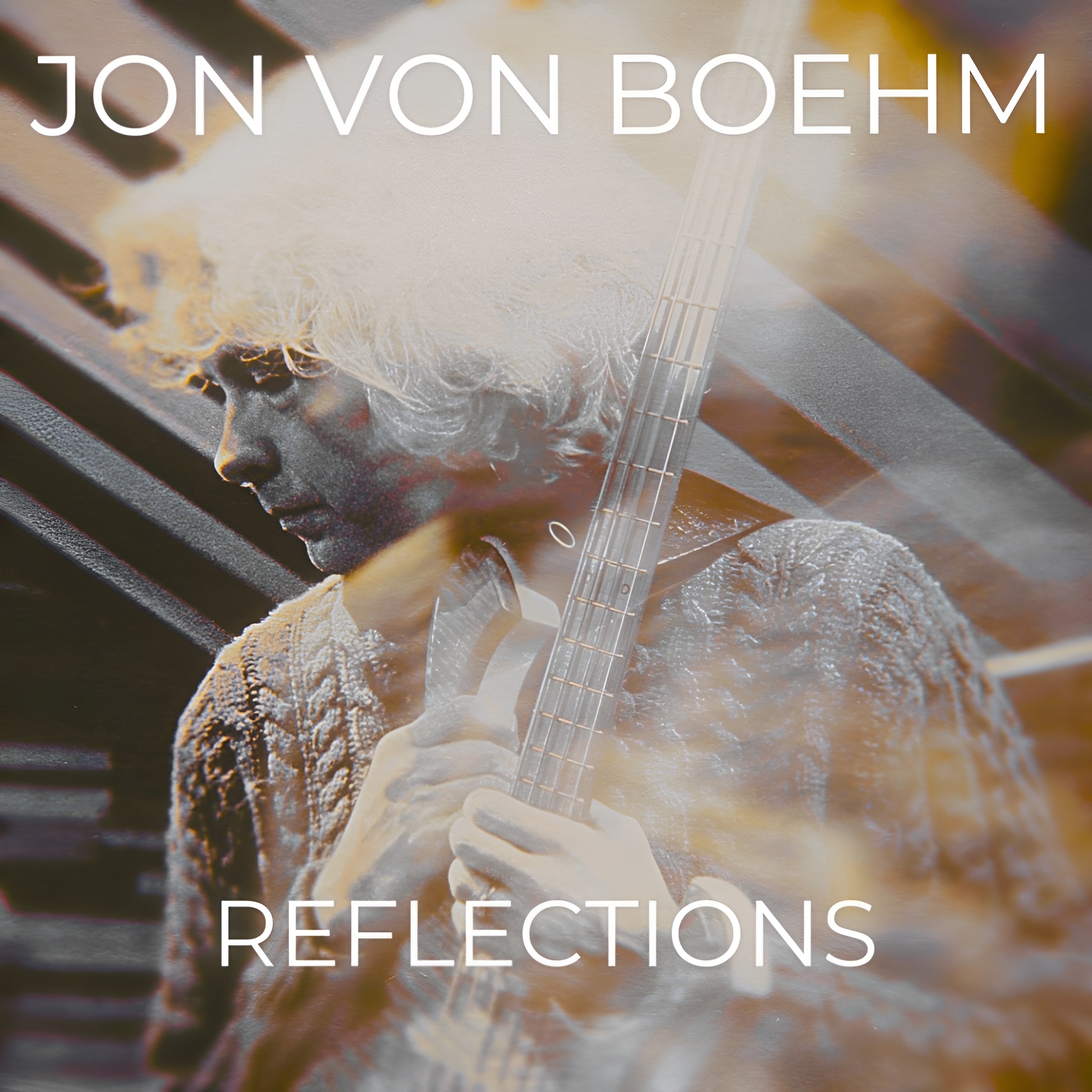
Jon von Boehm “Spin To Win” Reflections (Space Donkey/Planetary Group)
Bassist and composer Jon von Boehm has amassed an enviable list of players on whom he can call when he’s ready to record. Such was the case with Reflections, the Nashville-based musician’s fourth studio release as a leader. Some of the names in the credits have appeared on his recordings dating back more than a decade, cementing a sense of community as well as displaying a close musical kinship. Various combinations appear throughout, including the quartet that powers the engaging “Spin To Win.” Drummer Cory Ponder lays down a snaky, danceable pattern, dialoguing with von Boehm’s fathom’s deep bass lines and Walter Scott’s understated keyboards, and providing a foundation for saxophonist Troy Atkins. Pedal effects and distortion weave intriguing textures into the sonic tapestry, never detracting from the engaging melody. Atkins’ soulful, R&B-ish solo is a standout, as is von Boehm’s distortion-laden, emotionally rich piccolo bass spotlight. Hinted at throughout, fusion elements are more pronounced toward the end of the song, which winds down on a surprisingly lovely note. Von Boehm, who grew up in Erie, Pennsylvania, made his way down to Florida, where he studied with fusion bass giant Jeff Berlin and played on the Tampa scene before moving to Nashville. His self-titled debut album dropped in 2014, and a press release calls Reflections “a culmination of everything Jon has worked on in the past.”
Lindsey Webster “Music in Me” Music in Me (Shanachie Entertainment)
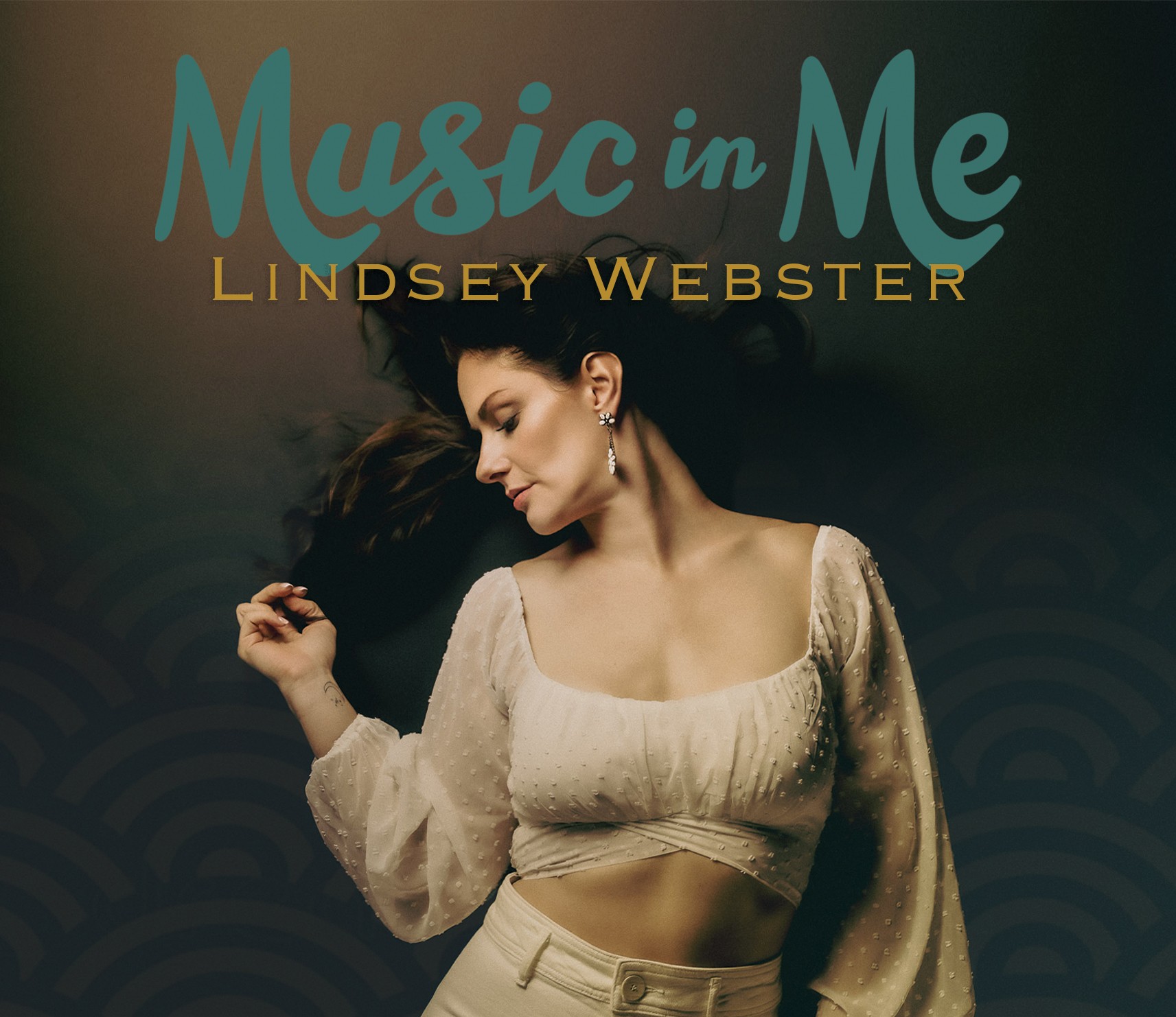
The title song to Lindsey Webster’s latest recording, Music in Me, is both mission statement and origin story. “I remember the first time in my life/Singing standards in the background every night,” she relates in an autobiographical lyric that will ring true for many jazz musicians. “Got a hundred bucks and a couple of drinks … Always dreaming of me on a big stage under lights/And that was enough to keep me going.” Fortunately, the rewards became more substantial as the vocalist claimed rare air with four consecutive No. 1 smooth jazz radio hits, including “Fool Me Once” from her 2015 release You Change. Webster has embraced change on Music in Me, as she hews closer to her soul-R&B roots and, for the first time, performs vocal duets (respectively with Anthony Hamilton and Stokley Williams, who also plays drums on the album). As showcased on that title track, Webster’s smoky, sensual vocals perfectly complement the material — as it should; she co-wrote it — and she receives top-shelf accompaniment from keyboardist Keith Slattery, violinist Kathleen Parks, bassist Chris Snowden, drummer Williams and guitarist Mike Demicco, whose stinging, bluesy lines add fire and edge. In late May, Webster will be hosting Music in the Mountains at Full Moon Resort, a festival in Big Indian, New York, featuring fellow contempo-jazz stars Richard Elliott, Keiko Matsui and Vincent Ingala. Located in the Catskills, it’s just 40 minutes from her hometown of Woodstock, but truly shows how far she’s come, from the little girl listening to her parents’ records to the world stage.

Luis Nacht y Camila Nebbia “La Colgué” Noche y Niebla (ears&eyes)
With surnames that conjure drama and romance — Nacht translates to “night” in German, Nebbia is “fog” in Italian — the cross-generational pairing of Argentine-born saxophonists Luis Nacht and Camila Nebbia transcend preconceived notions. On their new quartet recording, Noche y Niebla, the players — who’ve worked together for more than a decade — eschew the merely decorative as they dive into thorny, knotty improvisational conversation with each other and the deeply focused rhythm team of bassist Jerónimo Carmona and drummer Fermín Merlo. One of the few predetermined elements of the session, which took place in Buenos Aires, was a framework of song titles, which would guide the sonic and emotional direction of each piece. Playing on another meaning of “fog,” “La Colgué” references an Argentine expression connoting distraction or forgetfulness. The saxophonists wend and weave around one another, exploring the terrain as they create it in real time, with bowed bass and pattering drums helping to sketch the topography. Short lines contrast with skirling flights of nervous energy, the effect being one of nervous tension and anxiety that’s hardly resolved by the end of the short piece. Emphasizing psychological depth and sonic complexity, Nacht and Nebbia make music that rewards close listening. As Nebbia says, the improvisation on the record is “a radical commitment to the present moment. We are not only searching for melody, but for the expression of sound in its most solid and stripped-down state.” Nacht also weighs in: “My lyricism collides with Camila’s sonic purity, and that tension becomes the true composition of the record.”
Sylvie Courvoisier Trio “Éclats — for Ornette” Éclats — Live in Europe (Intakt)
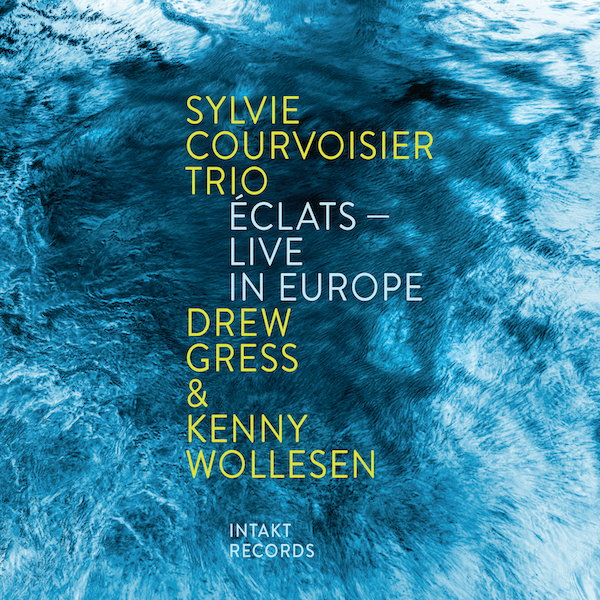
In a variety of settings, with a variety of collaborators, Sylvie Courvoisier has carved out a niche for her joyful but uncompromising avant-garde expression. The Swiss-born, Brooklyn-based pianist-composer’s duo recording with trumpeter Wadada Leo Smith, Angel Falls, was a highlight of 2025, and she’s found creative foils in like-minded artists such as Mary Halvorson, Ken Vandermark, Nate Wooley and Evan Parker, to name a few. But she frequently returns to her trio of more than a dozen years with bassist Drew Gress and drummer Kenny Wollesen, the three having created a deep bond that spans studio sessions and concert stages and continues to develop. The trio mates’ latest recording, Éclats — Live in Europe, captures them on stage in Essen, Munich and Paris during a 2025 continental tour. Previously recorded on the trio’s 2018 release D’Agala, Courvoisier’s “Éclats — for Ornette” opens the live album with an energetic burst. Playful and bluesy, the tune is a fitting salute to Ornette Coleman, an obvious touchstone for the pianist and her cohorts. And, like Coleman’s music, it’s filled with intriguing twists and sonic curveballs, as when Courvoisier dives into the piano’s innards and plucks the strings to otherworldly effect. Gress and Wollesen provide stellar support, conversing with and shadowing the pianist even at her spikiest, and offering thrilling solos of their own. Courvoisier is a marvel, creating gleeful mayhem with a dynamic attack that seems designed to perk up ears and rivet listeners. Mission accomplished, as evidenced by the Essen audience who hoot their approval at the song’s dramatic conclusion. “Éclat” is defined as a “showy display of great brilliance,” and the trio lives up to it.
Web Web “Ataraxia” Kover Kover (Compost)
Together now for a decade, the Munich-based jazz supergroup Web Web provide listeners with a roadmap to their roots and influences with Kover Kover, an album comprising all cover material. Celebrating genre-and-generation spanning rock and pop heroes such as Jimi Hendrix, Black Sabbath, Joe Jackson, Talking Heads and Eurythmics, as well as European fusion and electronic music pioneers such as Klaus Doldinger, Grandbrothers and Kruder & Dorfmeister, Web Web reimagines works by artists whose music fired their imaginations and guided their sound. The group updates the title track to Ataraxia, a 1978 release by Doldinger’s Passport fusion band, bringing a chill, modern vibe to the lovely melody. Roberto Di Gioia’s bright Fender Rhodes and organ chime and burble, with bassist Christian Von Kaphegst’s subtle bass tones and drummer Peter Gall’s pattering drums and cymbals driving and accenting the proceedings. Tony Lakatos’ flute adds another layer of serenity to the atmospheric piece, which fades out with a twinkle, like starlight fading with the rising of the sun. Since their initial recording, 2017’s Oracle, Web Web has been crafting a sound with deep roots in 1970s soul-jazz, and working with like-minded artists such as Yusef Lateef, Charles Tolliver, Mulatu Astatke and Brandee Younger (on the band’s 2021 recording Web Max). With Kover Kover, they reveal even wider influences, while maintaining their soul-jazz ethos.