

Sylvie Noble + Ursula Harrison “New Eve” New Eve (Flaming Sword)
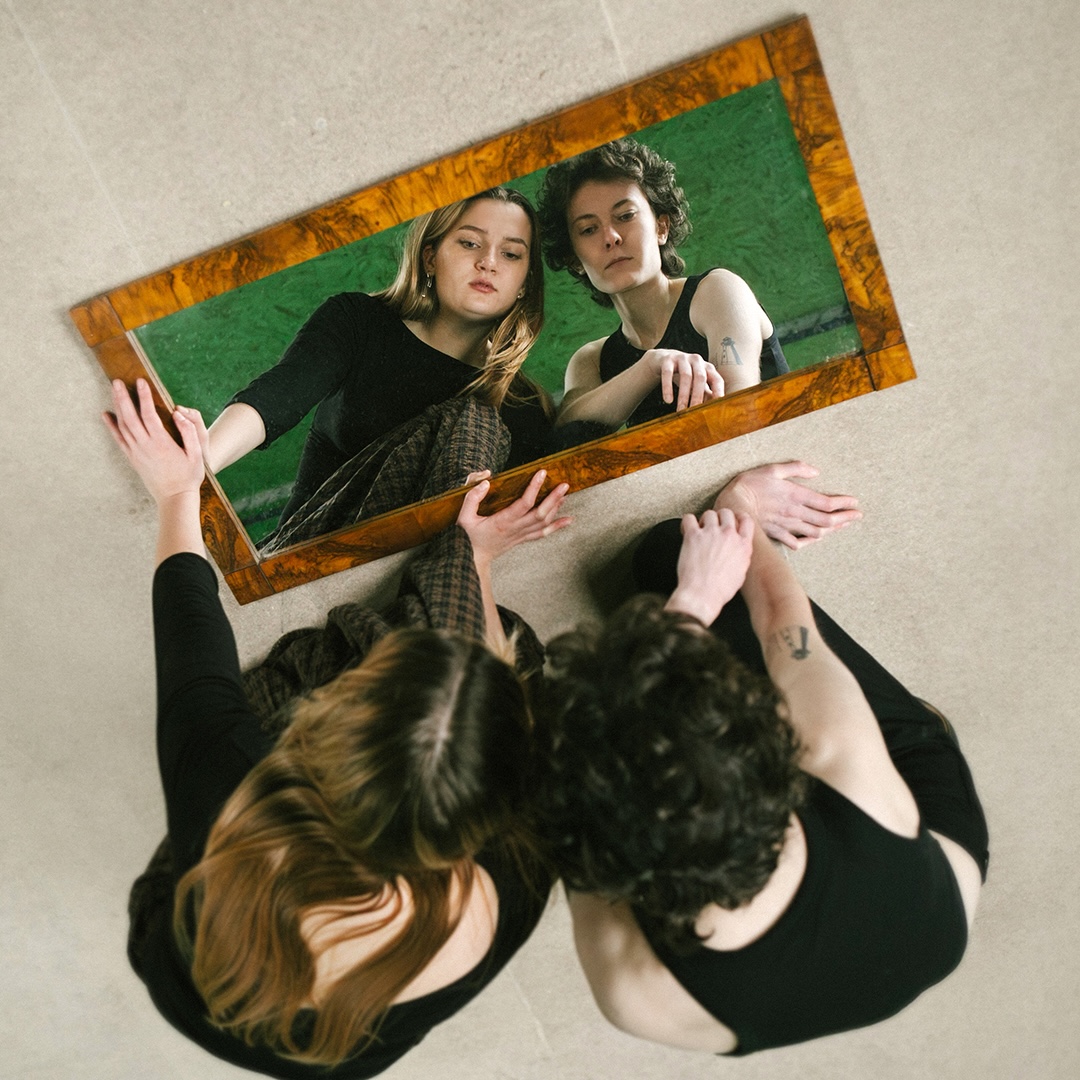
Bass and vocal duos are something of a rarity in the jazz world. But when done smartly — think of Sheila Jordan with Harvie S — they can be a real treat, a display of high-wire musicality with no safe place to land. Vocalist Sylvie Noble and bassist Ursula Harrison are more than up to the challenge, as the UK-based twosome proves on its debut album, New Eve. The pair met at a summer school, where both of their parents were teaching; Noble’s dad is pianist and composer Liam Noble, and Harrison’s mum is bassist, multi-instrumentalist and composer Paula Gardiner. Discovering mutual musical interests, Noble and Harrison later began working together on the South Wales jazz scene, honing their craft and developing the synergy evident throughout their inaugural duo release. On the album’s title track, Noble’s swift vocals and Harrison’s nervous pizzicato churn a dark and anxious mood. Lyrics of dissatisfaction with the status quo (“the new world, it takes and it takes”) are countered by hopes for regeneration (“cover me with new skin, new soul”) and ride an inexorable pulse that continues apace through a dexterous scat solo. Edgy, engaging and impressive, the performance provides a centerpiece to the nine original compositions that announce the arrival of a fresh voice in the jazz world.
Skerik “Air Garden” SKERIK 061725 (Loosegroove)
Tenor saxophonist Skerik is mainly recognized for his exuberant musical excursions alongside groove-heavy jazz and funk artists such as The Headhunters, Dumpstafunk and Stanton Moore, as well as co-founding genre-defying bands such as Critters Buggin and Garage a Trois. However, he’s also heavily influenced by ambient music, which is the focus of his latest release, SKERIK 061725. While growing up in Seattle, Skerik (born Eric Walton) heard his mom’s copy of Brian Eno’s Ambient 1: Music for Airports, and a high school buddy turned him onto the hushed, atmospheric music of the ECM label. But he didn’t fully appreciate it until years later, incorporating some of those sensibilities into his own recordings. Recently, Les Claypool, of Primus fame, invited Skerik to undertake an ambient project at his Studio Litho in Seattle — and for release on Claypool’s Loosegroove label — proposing that the saxophonist record the entire album in one day and that he play as minimally as possible. The results, which Skerik describes as “don’t wake the baby music,” comprise a six-song, 40-minute program that will surprise some long-time listeners. On tracks such as “Air Garden,” Skerik creates sonic environments enveloped by space and atmosphere. A reverberant, repeated motif conjures a distant foghorn, or maybe whale song, as the long tones of his horn traverse the soundscape at an almost glacial pace, with breathy punctuations evoking the tide gently lapping the shore. The overall effect is serene without being soporific, generating at least as much mystery as mood and allowing listeners to insert their own narrative or imagery.
Collin Sherman “Force Beyond Control” Ouroborosuite (Ex-Tol)
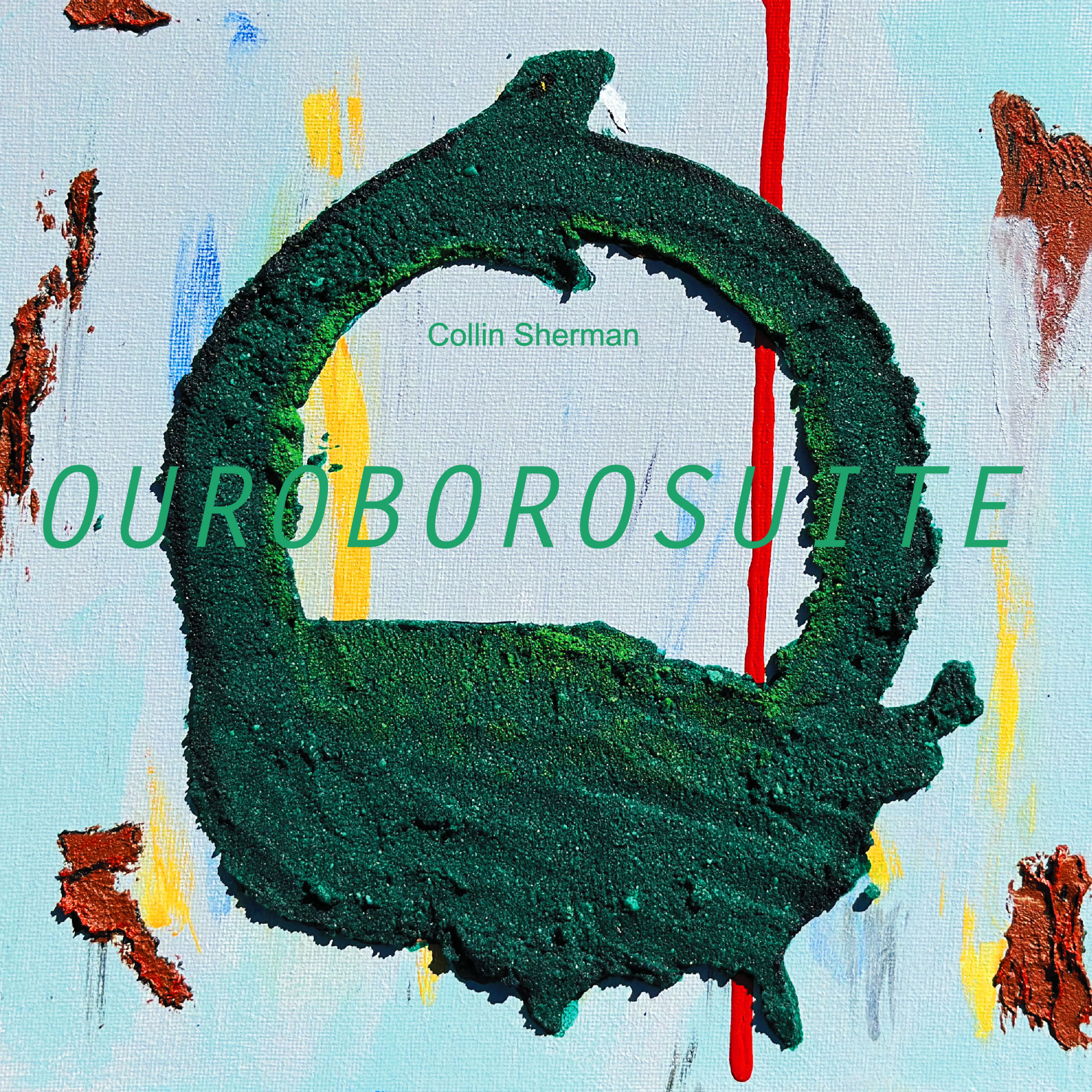
Collin Sherman pulls no punches on Ouroborosuite. The seven-song socio-political tract was born of the multi-instrumentalist and composer’s anger, frustration and fear of what will become of our country during an unprecedented attack on democratic norms. “The United States is eating itself,” Sherman writes in the album’s liners. “The ceaseless vitriol of the political sphere permeates nearly every moment of our lives.” It’s no coincidence that he titled the set of songs Ouroborsuite, nor that he used the image of the ouroboros, a self-devouring serpent, as album art; in addition to composing all the music and playing all the instruments, the New York-based musician designed and painted the cover. Sherman further provides the dark, doomy vocals on “Force Beyond Control,” intoning pointed lyrics such as, “Carrot or the stick, the state determines which/But the stick lands a fearsome blow when wielded by pricks/Talking heads on TV/100 for a dime/Saying show me the person, I’ll show you the crime.” A bed of rhythm and horns burbles just below, with Sherman harmonizing lines and skirling solos on alto and soprano sax, and layering the palette with clarinet and bass clarinet, guitar, electric cello, MIDI pipe organ, synthesizer and drum programming. The tune ends with a cry of desperation. “Save us!” he wails. “Save us!” While he notes that the ouroboros is often viewed as a symbol of regeneration, Sherman sounds an alarm to act while its still possible to prevent total annihilation.
Paulo Almeida “Burning Skin” Love in Motion (Dox)
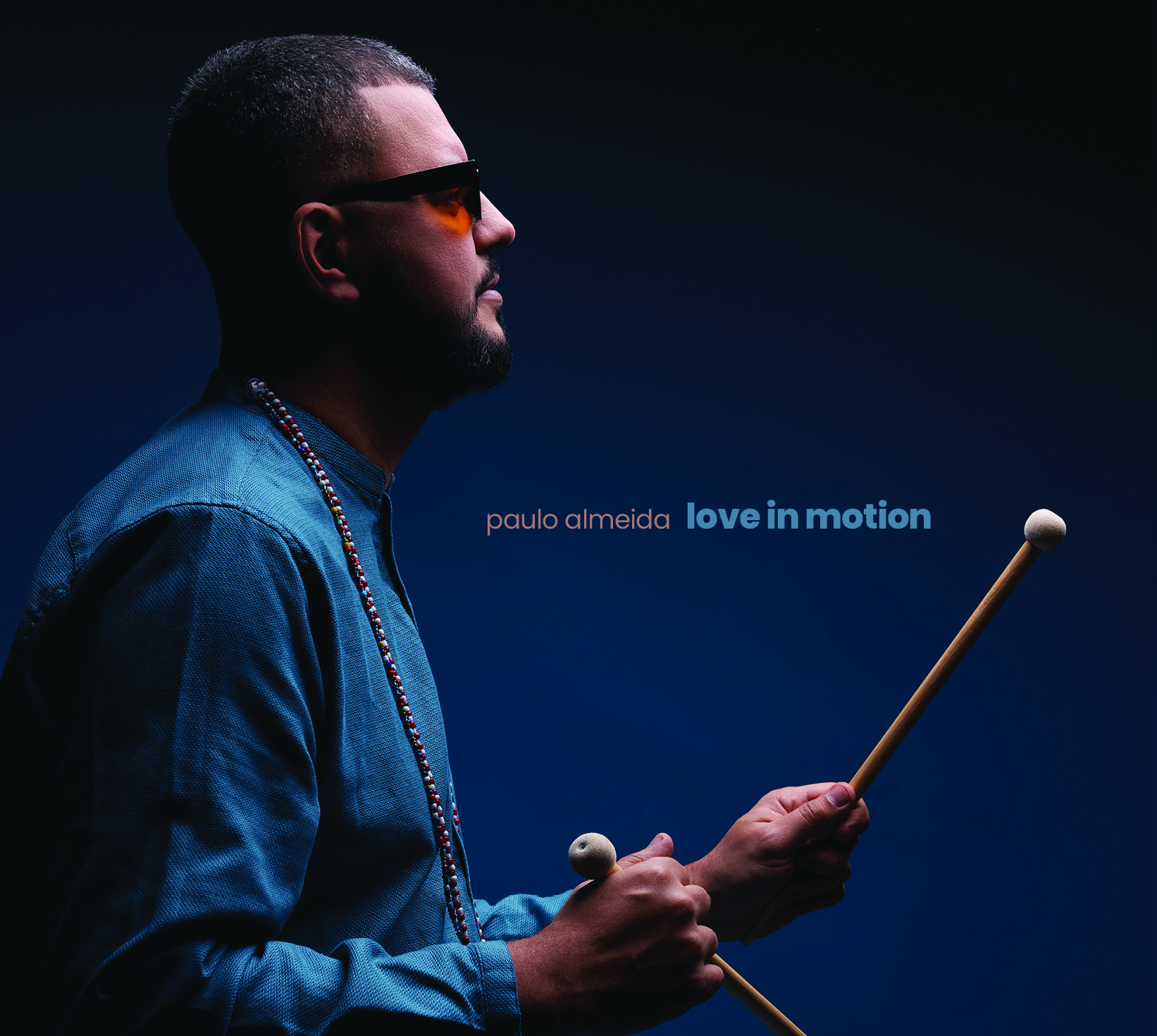
With instrumental music, it’s often difficult to determine what composers had in mind while writing a piece until they title the work or explain its origin. Such is the case with drummer and composer Paulo Almeida’s “Burning Skin,” from his latest release, Love in Motion. “I wrote this song during a time when I was dealing with anxiety, and one of the symptoms was a burning sensation on my skin,” he writes in the track notes. The statement adds to listeners’ appreciation of the performance by Almeida’s quartet, as they navigate the rising and falling melody — inspired by Hermeto Pascoal, one of Almeida’s major influences — and churn dark, anxious rhythms. Alto saxophonist Josh Schofield and pianist Lorenzo Vitolo bring a nervous vitality to the session, particularly in their solos and comps, and Vitolo adds synth textures with his left hand. Almedia displays a deft, funky touch, driving the piece along with acoustic bassist Joan Codina and creating a modern straightahead feel with shades of postbop and contemporary jazz; the unresolved ending of the piece further adds to a sense of unease. A native of Brazil, Almeida recorded the album in Basel, Switzerland, where he now resides. The shadings and lyrical nature of his music reflect the character of his homeland, expecially the influence of Pascoal, whom he calls a “lifelong inspiration.” Love in Motion is the drummer’s sixth release under his name, and he’s absorbed plenty from his experiences with heavyweights including Pascoal, Guillermo Klein, Lionel Loueke, Wolfgang Muthspiel, Jorge Rossy and Anat Cohen.
Club d’Elf “Left Hand of Clyde” Loon & Thrush (Royal Potato Family)
For nearly 30 years, Boston’s Club d’Elf has been brewing its signature blend of Moroccan-influenced funk laced with jazz, fusion, dub, hip-hop and electronica. Bassist and founding member Mike Rivard came under the tutelage of Brahim Fribgane, a Moroccan musician who turned him onto North African grooves and the ancient, ecstatic Gnawa music that threads throughout Club d’Elf’s repertoire. The band and friends’ new album, Loon & Thrush, is its first without Fribgane, who died in 2024; it also nods to another major touchstone, the Grateful Dead, by remaking a couple of that iconic outfit’s tunes in their own individualistic style. The original track “Left Hand of Clyde” is a straight-up slab of steaming funk, nodding to the 1970s while also incorporating dub and hip-hop flavors. Rivard lays down the heavy bass groove, with slippery, expert drumming from Erik Kerr, stinging guitar fills from Lyle Brewer and Jeff Lockhart and era-perfect Fender Rhodes supplied by Amy Bellamy. Mister Rourke’s turntable scratching and sampling bring the soundtrack into another decade, but the overall sensibility — including Brewer’s effects-laden guitar solo, and a jazzy break a little past the midpoint — reveal deep affection for the golden age of funk. While Club D’elf’s personnel has varied over the decades, its mission has not. As a press release states: “Trance, repetition and ecstatic propulsion are the glue that holds together the band’s shifting lineups, improvisatory flights and broad stylistic vocabulary.”
Dave Schumacher & Cubeye “Agua Con Gas” Agua Con Gas (Cubeye Music)
Dave Schumacher developed a passion for Afro-Latin music while touring with Lionel Hampton’s band, thanks to his roommate, conguero Sam “Seguito” Turner. It was Turner who hipped the baritone saxophonist to artists such as Arsenio Rodriguez, Cachão, Tata Güines and other mainstays of the genre. During his career, Schumacher, whose résumé includes the bands of Harry Connick Jr., T.S. Monk and Tom Harrell, had certainly performed and recorded Latin jazz. But his inagural release with his Cubeye ensemble, 2024’s Smoke in the Sky, was his first album fully dedicated to the music. The group’s latest, Agua Con Gas, presents another exciting chapter in its evolution, as Schmacher leads the allstar musicians through a program of original tunes and well-curated covers. The lead-off title track, a Schumacher compostion, launches the album with an irresistible rumba rhythm introduced by Schumacher, pianist Manuel Valera, bassist Alex Apolo Ayala, drummer Yusnier Sanchez and drummer Joel Mateo. At once earthy and sophisticated, the track veers into straightahead swing, encompassing standout solos by Valera and trumpeter Alex Norris, but never loses the Latin sabor, which is underlined by conga and drum breaks and the harmonizing horns of Schumacher, Norris and tenor saxophonist Peter Brainin. As Schumacher observes in his track notes, the tune “swing[s] on both sides of the rhythm. It flows seamlessly between rumba and swing.”
Alister Spence “Determination” Always Ever (Alister Spence Music)
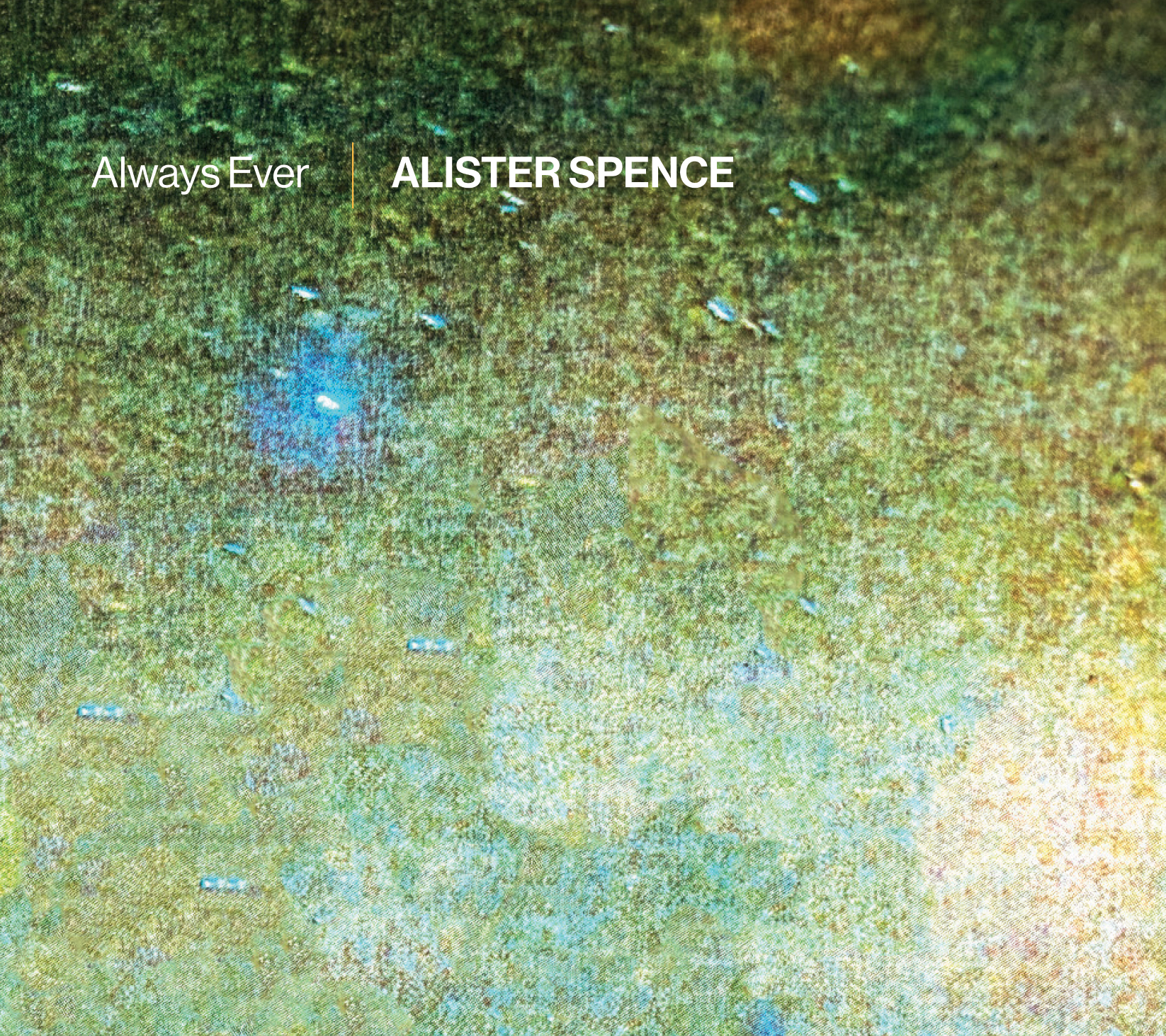
Challenged by a bandmate to channel avant-jazz giant Cecil Taylor, Australian pianist Alister Spence passed through the looking glass into another dimension of jazz expression. “That experience,” he says, “inspired me to follow my ears and my intuition about what pleases me soundwise, and slowly blend more and more into my practice.” That practice continues on Spence’s recent release, Always Ever, an adventurous album of instantly composed pieces for solo piano. Through 16 tracks, Spence indeed “follows his ears,” or perhaps his fingers, as he pulls music from the ether, transmitting various moods, colors and emotions into engaging performances. Each was played and recorded in real time, without editing or overdubbing, and sonic effects are the results of prepared piano techniques (e.g., placing objects inside the piano to distort the resonance of the strings). Spence unleashes nervous energy from the start of the track “Determination,” rushing headlong in one direction then another; like a trapped animal, he seems intent on finding an exit, thwarted time and again but undaunted. Another byproduct of his studies of Cecil, Spence says he wants to remain “as in the moment as possible. … I’m interested in accidents and what they cause to happen in the music, and I deliberately try to create those accidents for myself.” Spence, who has composed for film and television, also works with like-minded artists such as fellow piano adventurer Satoko Fujii, as well as in a trio with bassist Lloyd Swanton and drummer Toby Hall of The Necks.
Eliane Elias “At First Sight” Ao Vivo (Candid)
While her discography dates back more than 40 years, Eliane Elias is best experienced live in front of an audience. And that’s just how you’ll find her on her latest recording, Ao Vivo, leading her quartet at the SFJAZZ Center’s Miner Auditorium in October 2023. “We stretch out more on stage,” says the pianist and vocalist, who proceeds to do just that during a program spotlighting deeply ingrained Brazilian and Afro-Cuban roots. The set, which is heard in sequence as the quartet performed it, features classics by bossa giants Ary Barroso, Roberto Menescal, Dori Caymmi, and of course, Antonio Carlos Jobim and Vinicius Moraes, and pulls tunes from across Elias’ 30-plus recordings. The leader’s piano truly shines on an instrumental read of her composition “At First Sight,” which she would go on to perform with vocals on her 2024 release Time and Again. And while her sultry, sophisticated singing features elsewhere on the live recording, here she revels in the sprightly melody, her sparkling piano cresting waves of rhythm expertly supplied by bassist Marc Johnson and drummer Rafael Barata. As the title promises, the trio evokes the exuberance of falling madly, impulsively in love — even when Elias dips into the bluesy notes — which is echoed by guitarist Leandro Pellegrino’s joyful solo. Even clocking in at more than seven minutes, the performance leaves listeners wanting more. “The intention has always been to hold the audience and keep them uplifted throughout the concert,” Elias says, “so that in the 90 minutes they’re with us, it’s like nothing else exists.”
Dave Douglas “Come Sunday” Transcend (Greenleaf Music)
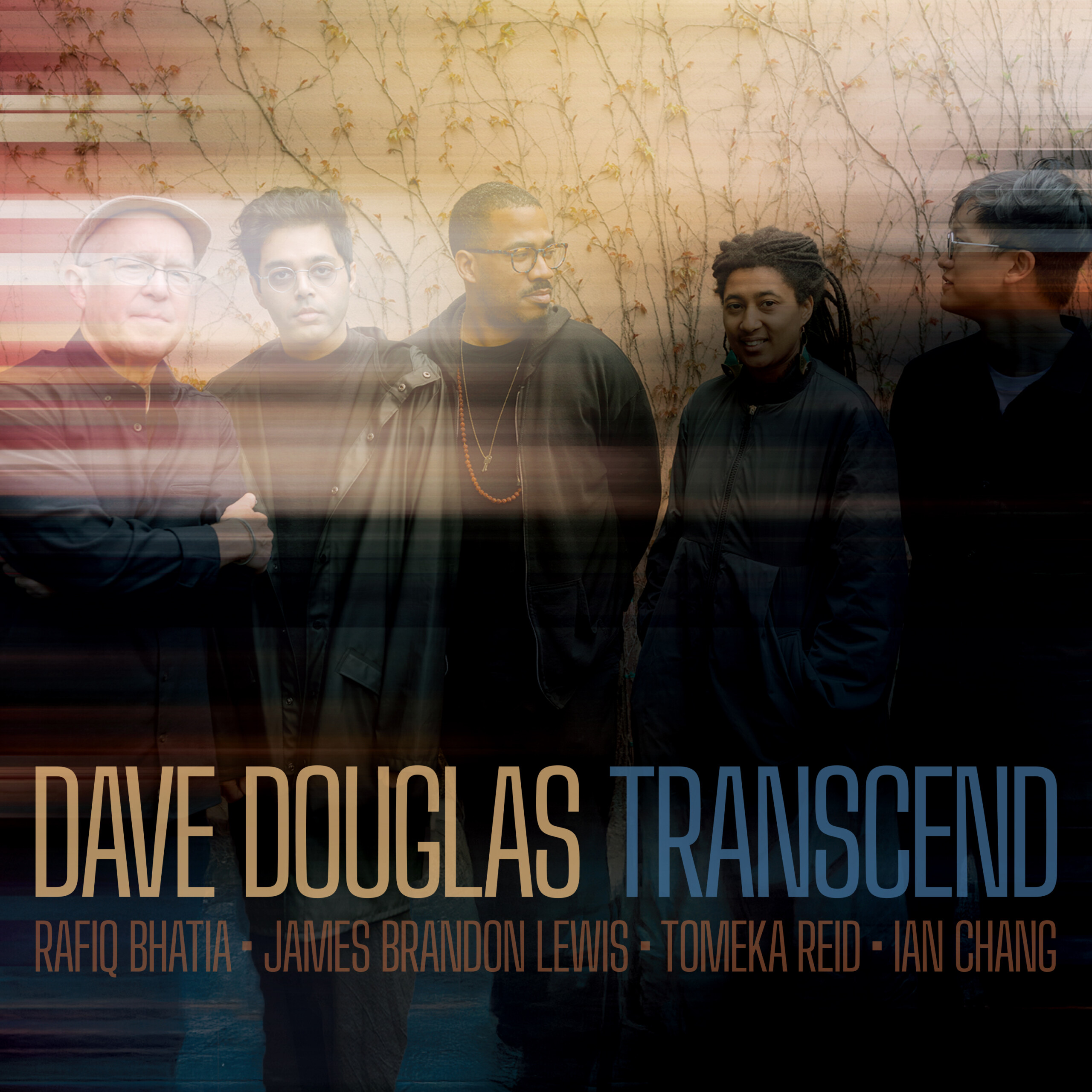
It takes a great deal of confidence to take one of the most beautiful entries in the Duke Ellington songbook, dip it in grungy sonic textures and add a laconic hip-hop beat to boot. And yet, trumpeter and composer Dave Douglas trusts his musical vision enough to do just that with the beloved “Come Sunday,” a composition Ellington wrote for his 1943 Black, Brown and Beige Suite. Is nothing sacred? Well, yes and no. On his recent release Transcend, Douglas looks to Ellington’s Sacred Concerts of the 1960s and ’70s as inspiration for a program that aims to achieve what the album title promises. Dipping into the Ellington canon, as well as compositions of his own, the trumpeter once again helms his GIFTS Quintet, a group of younger artists who aren’t necessarily burdened by expectations about Duke’s music. On “Come Sunday,” Douglas’ muted trumpet bustles in on a thumping bass line provided by cellist Tomeka Reid, with guitarist Rafiq Bhatia and his Son Lux bandmate, drummer Ian Chang, keeping the proceedings from getting too predictable. Despite the sonic experimentation, James Brandon Lewis’ tenor saxophone almost can’t help adding a gospel feel. Sparkling electronic effects accompany Bhatia’s distortion-laden solo, and the guitarist lends an Eastern spirituality, until Brandon Lewis returns them to the church, even as the rhythm section denies any easy resolution. Obviously, Douglas connects with Ellington’s spiritual orientation and continual striving for fresh expression. “The feeling that you are part of the holy, the numinous, that art is a communion with that mysterious spirit,” Douglas says. “No matter how mundane the circumstance, there is always love and meaning. You always want to be trying new things, learning. Every day is a gift.”
Eli Howell “Matchmaker” Steps Taken (D Clef)
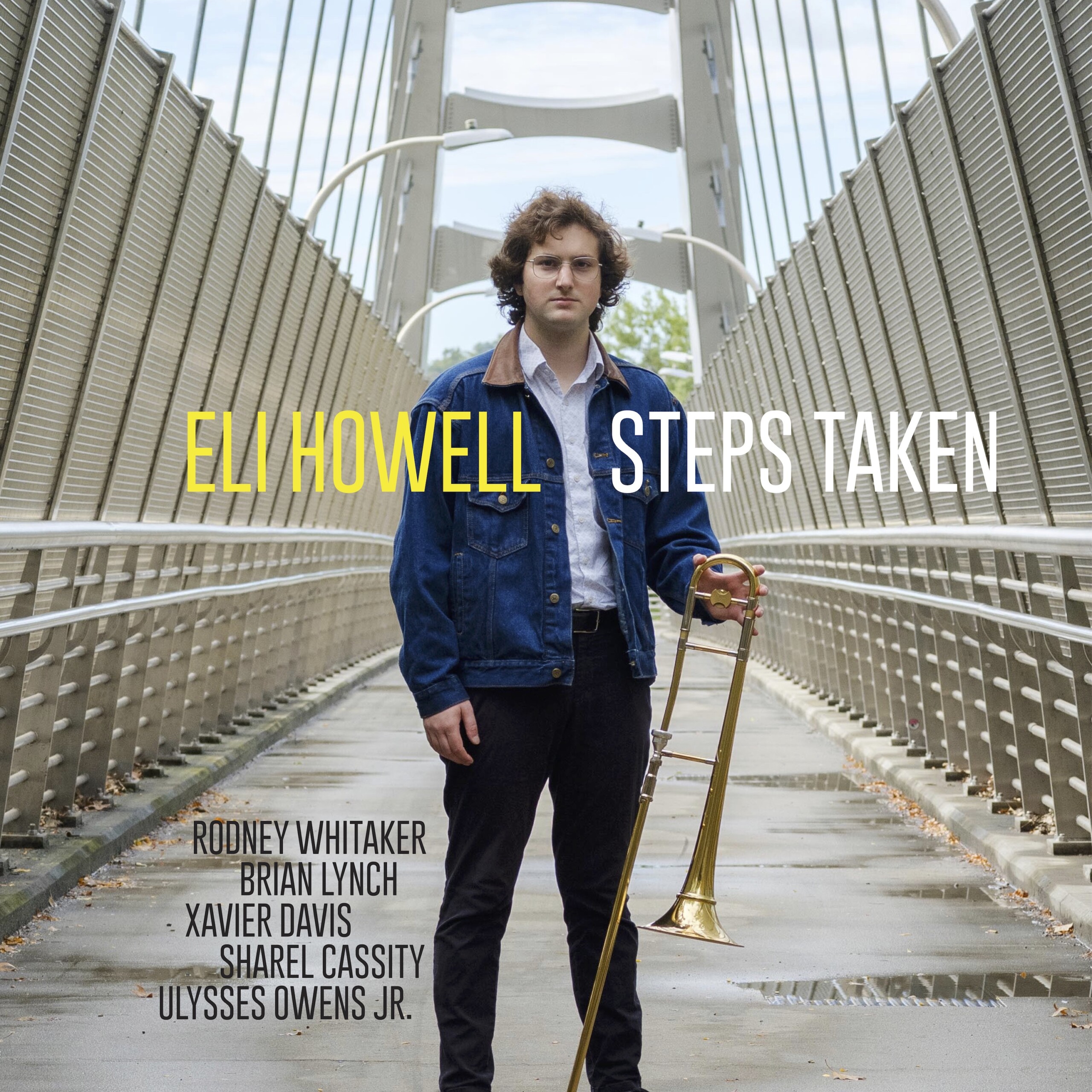
It seems almost as if the jazz gods were conspiring against Eli Howell. On the eve of the opening session for his debut album, lightning struck Troubadour Recording Studios at Michigan State University, where the trombonist earned both undergrad and master’s degrees. And, previously, he had developed focal dystonia, painful contractions of the facial muscles that can afflict horn players. However, these setbacks actually provided opportunities for him to test his mettle; he reconvened the musicians for the recording date at a makeshift studio, the stirring results of which can be heard on the new Steps Taken, and had battled back from his ailment with renewed purpose. “Coming back from that,” he says, “really made me find a lot of joy in playing again.” That joy — as well as several compositions he penned during his recovery — can be heard throughout Steps Taken, which launches with a cool and breezy modern arrangement of the Fiddler on the Roof classic “Matchmaker.” Part of the exuberance may also be attributed to Howell’s allstar bandmates, a lineup of heroes and mentors comprising alto saxophonist Sharel Cassity, trumpeter Brian Lynch, pianist Xavier Davis, bassist Steven Bowman and drummer Ulysses Owens Jr., who were likely rooting for him to succeed. Generating a little big band sound, the ensemble soars, with standout solos from Howell, Lynch and Cassity, and locked-in brilliance from the rhythm team. Los Angeles native Howell excelled outside the MSU campus, as well, working all over the world with artists such as Christian McBride, Kurt Elling, Lewis Nash, Renee Rosnes and Bob James.