

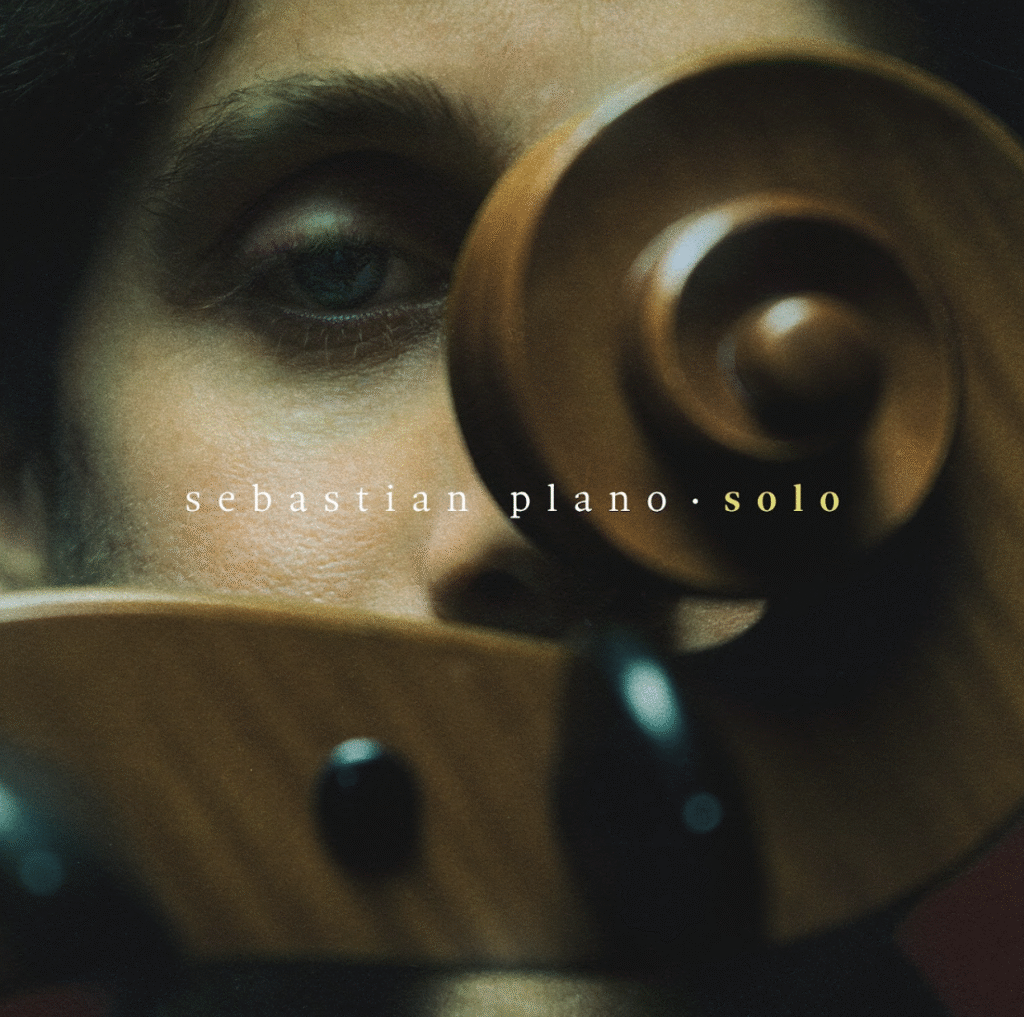
For an artist whose music has often blended chamber instrumentation, electronics and cinematic textures into sweeping emotional landscapes, Sebastian Plano’s “Solo” feels both unexpected and inevitable. The Grammy-nominated Argentinian cellist and composer strips away every layer that has defined much of his previous work, leaving only a single instrument and a single voice. The result is not an exercise in minimalism, but a deeply moving statement of artistic clarity.
Written and recorded over two years between Berlin and northern Italy, “Solo” is Plano’s first album composed entirely for unaccompanied cello. In lesser hands, such restraint might feel limiting. Instead, it reveals the extraordinary expressive range of an artist who has spent decades translating personal history into sound. Across these pieces, the cello becomes storyteller, witness and companion, carrying the listener through landscapes shaped by memory, migration and self-discovery.
Plano’s journey—from Rosario, Argentina, through Duino, Lisbon, Boston, San Francisco and Berlin, to his current home in northern Italy—forms the emotional backbone of the album. Yet “Solo” never feels autobiographical in a narrow sense. Rather, it explores the universal experience of movement and belonging, the way places shape identity and leave traces long after we have moved on.
The album’s emotional arc is particularly evident in pieces such as “Every Beginning,” “Sense and Change” and “Wonders.” “Every Beginning” captures the thrill and uncertainty of arrival, its phrases unfolding with a gentle sense of momentum and possibility. “Sense and Change” turns inward, reflecting on transformation and the courage required to embrace it. Meanwhile, “Wonders” radiates youthful anticipation, recalling the pivotal moment when a teenage Plano first left Argentina to pursue his musical future abroad.
What makes “Solo” so compelling is its balance between compositional rigor and improvisational freedom. Many of the pieces began as spontaneous explorations before being shaped into finished works, and that immediacy remains audible throughout. There is a palpable sense of discovery in the music, as though Plano is listening alongside the audience, following each phrase wherever it might lead. The influence of Bach’s cello suites can be felt in the album’s architectural elegance, while subtle echoes of Ralph Towner’s lyricism and Scriabin’s harmonic imagination enrich its emotional palette.
For jazz listeners in particular, the album’s embrace of improvisation and its commitment to presence will resonate deeply. Plano approaches the cello not merely as a classical instrument but as a vehicle for exploration, allowing silence, texture and resonance to become as meaningful as melody. Every creak of the bow, every breath between phrases, becomes part of the narrative.
There are no electronic embellishments here, no orchestral swells and no studio trickery to soften the edges. Instead, Plano trusts the expressive power of wood, string and air. That vulnerability becomes the album’s greatest strength. Each note feels earned; each pause invites reflection.
At its core, “Solo” is a meditation on identity—on what remains when every distraction falls away. By presenting himself through the most exposed format imaginable, Sebastian Plano achieves something rare: an album that feels both profoundly personal and quietly universal. Intimate, contemplative and beautifully realized, “Solo” stands among the most compelling solo instrumental releases of the year.