

Bellbird “Blowing on Embers” The Call (Constellation)
The Montreal-based quartet Bellbird takes its name and prime directive from an aviary source, one with a loud and distinctive cry. Fittingly, its musical touchstones include Eric Dolphy, who also drew inspiration from birds, as well as Charles Mingus, Ornette Coleman’s Prime Time, and the improv scene that developed around Montreal’s Café Résonance. Hints of indie rock and fusion can also be detected in the band’s central ethos, as heard on its latest release, The Call. “Blowing on Embers” proves an apt title for a track that begins with the doomy rumble of Eli Davidovici’s upright bass and Mili Hong’s shimmering drums, which set the mood for evocative intertwining horn lines. The expressions of tenor saxophonist Claire Devlin and alto saxophonist Allison Burik grow increasingly intense and untethered, echoed by Hong’s explosive drumming. As its title indicates, the glow of coals becomes a roaring conflagration, which also serves as a metaphor for the struggle of Palestinians, to whom the group dedicates the piece. The bandmates came together during the pandemic, but truly cemented their relationship after playing the Ottawa Jazz Festival in 2021. They released their debut album in 2023 and have been continually refining their sound and methodologies, while inverting expectations of the conventional jazz quartet.
Chris Standring “Photographs” Time of Change (Ultimate Vibe)
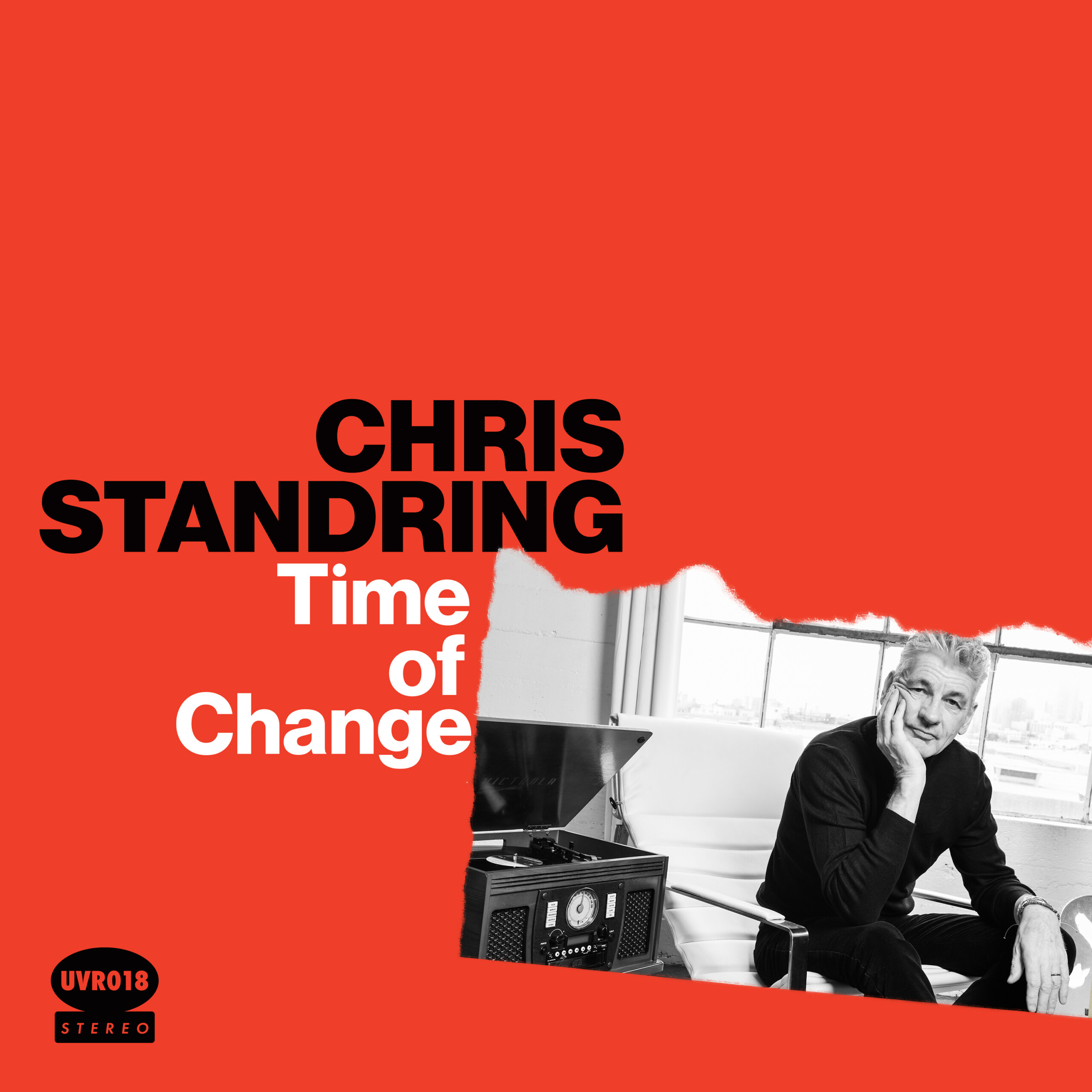
Chin in hand, seated next to a vintage-looking turntable, Chris Standring peers pensively from the cover of his latest recording, Time of Change. Self-reflection was very much in the mind of the guitarist and composer, who has undergone big life changes of late: He recently lost his father, was married for the first time and moved back to his native England after more than three decades in Los Angeles. Naturally, he turned to the music of his glory days, as well as the music that inspired him, for solace and a sense of continuity. Surrounding himself with familiar comrades, Standring crafted an album that nods to the heyday of contemporary jazz and R&B, with nods to touchstones such as Quincy Jones and early Yellowjackets. Listeners might also detect echoes of George Benson in Standring’s articulate string work on opening track “Photographs.” Bassist Andre Berry, drummer Chad Wright and percussionist Lenny Castro lay down a cool, mellow groove, blending samba and blues feels for a breezy rhythmic concoction. Standring’s melodic lines ride the currents like a bird in effortless flight, and he shares the solo spotlight with pianist George Whitty. “When I hear this song, I can imagine sitting next to a bay window looking out into the pouring rain contemplating life,” Standring says. “It probably wasn’t raining when I wrote it, but the nostalgic and reminiscent feeling was definitely with me.” That mental image joins the very real ones that appear in the guitarist’s book of photos, A Jazz Life in Pictures, which he published in December.
Dave Stryker “Blue Fire” Blue Fire: The Van Gelder Session (Strikezone)
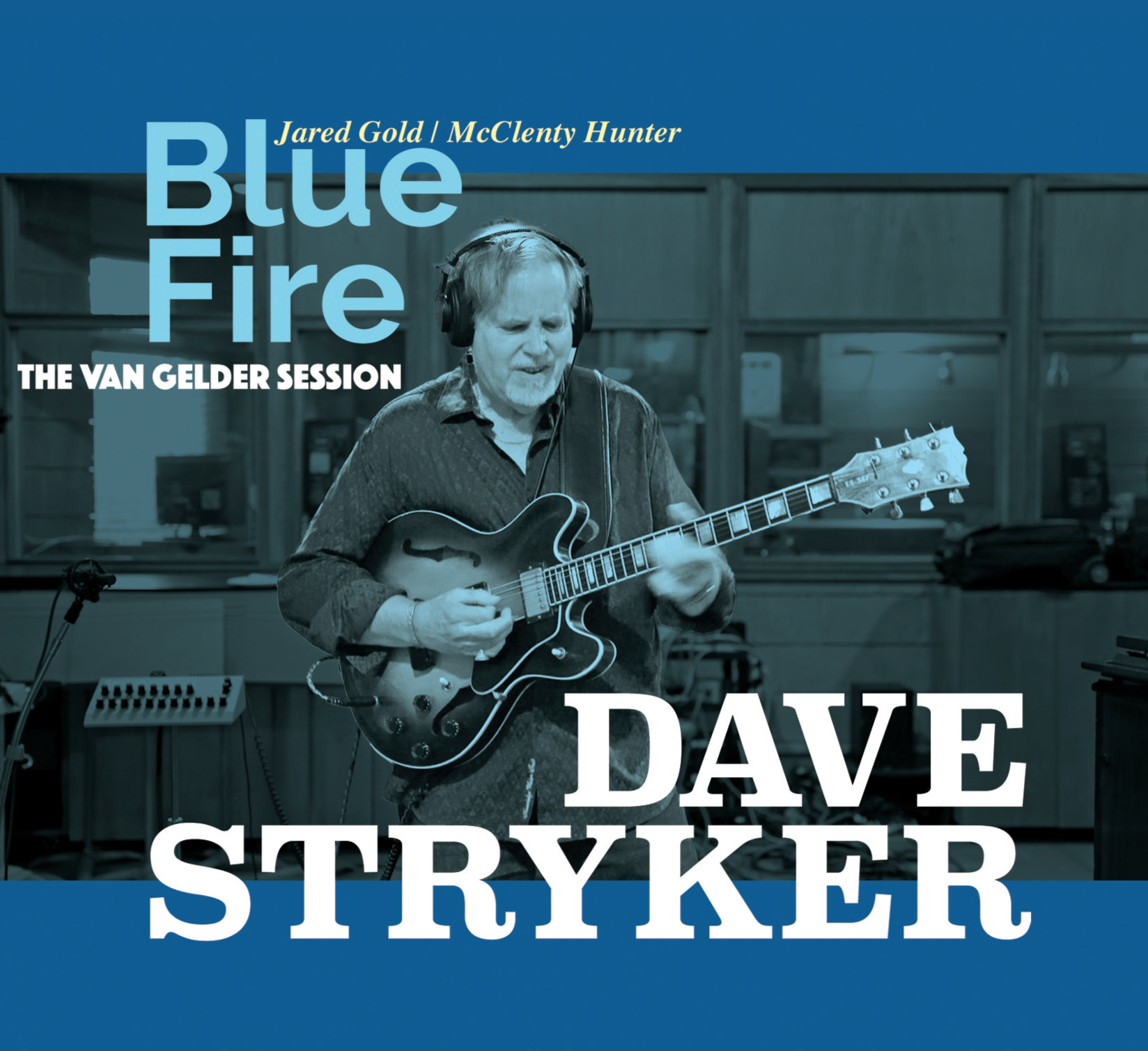
Rudy Van Gelder’s magic weaves through some of the greatest jazz recordings of the past six-plus decades. The engineer, and the storied New Jersey studio he established — first in Hackensack, then in Englewood Cliffs — set a high-water mark for jazz recording, which is evident in the classics he engineered for Blue Note, Prestige, Impulse! and CTI. Although Van Gelder died in 2016, his studio lives on under the direction of close associate Maureen Sickler and her husband Don. Dave Stryker is among a spate of current-day jazz artists who have tapped into the Van Gelder mojo. The guitarist recorded with his longtime trio mates — organist Jared Gold and drummer McClenty Hunter — at the legendary space, the obviously inspired results of which can be heard on his new release, Blue Fire. Stryker and company dive right in with the bluesy groover “Van Gelder’s Place,” and follow with the note-happy title track, both penned by Stryker. Breakneck unison lines from the guitarist and Gold are supported by splashy, speedy accents from Hunter’s snaky snare and cymbals. Stryker takes point with his deft and fiery leads, as Gold comps and provides bass pedal propulsion. Gold then jumps into the solo spotlight, churning excitement with his Hammond wizardry on the same ax once played by giants Jimmy Smith and Larry Young, both of whose influenced can be detected here. As throughout, Hunter drives the action with a sizzling but restrained muscularity that likely would get the nod from Tony Williams. Blue Fire is a sterling entry in Stryker’s discography, and a fine addition to the Van Gelder Studio legacy.
Ian Smit “Barker de la Carnivale” QUE? (self-released)
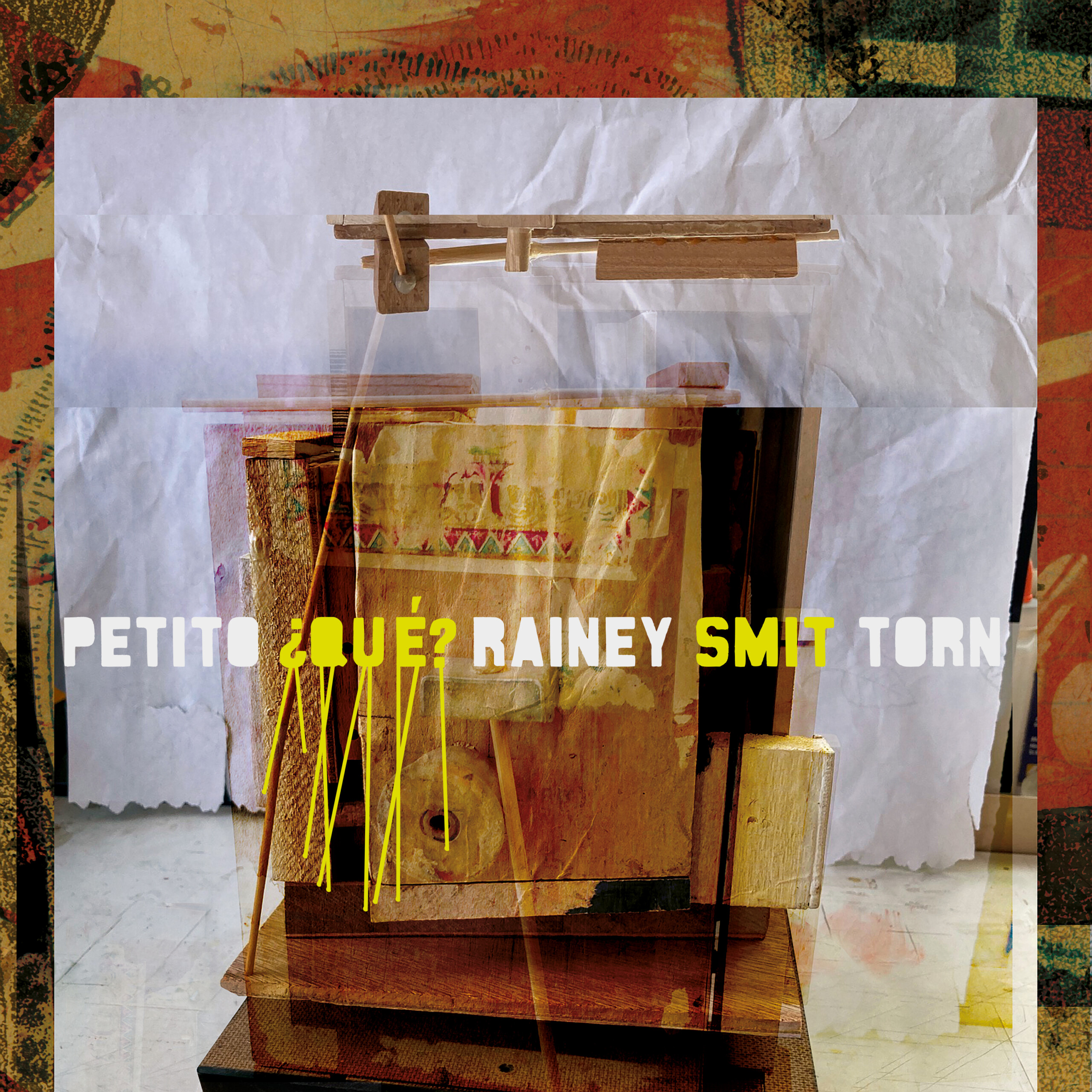
Organic and electronic sounds mesh intriguingly on Ian Smit’s latest recording, QUE? The guitarist switches between plugged and unplugged instruments, as does fellow guitarist David Torn and bassist Scott Petito. Drummer Tom Rainey is his own perpetual motion machine, adding layers of color, texture and propulsion to the proceedings, much of which was improvised in the moment. Such was the case with “Barker de la Carnivale,” which begins with effects that sound like the nocturnal croaking of frogs. Petito and Rainey churn a dark, brooding rhythmic foundation over which Smit and Torn unleash fanged, feedback-laden skronk that sounds positively demonic — their amps don’t go to 11, they go to 666. The song’s title conjures the mystery and menace of a backwoods carnival where one might not dare to wander beyond the big top or wish to encounter the barker in the dark. Yet there’s method to the malevolence, as each of the participants enjoys a long history of exploratory music making; each co-signs Smit’s directive that the session be “conversational with lots of dynamic ups and downs,” which seems a natural state of being for these musicians.
Steve Rosenbloom Big Band “Mosley” San Francisco 1948 (Glory)
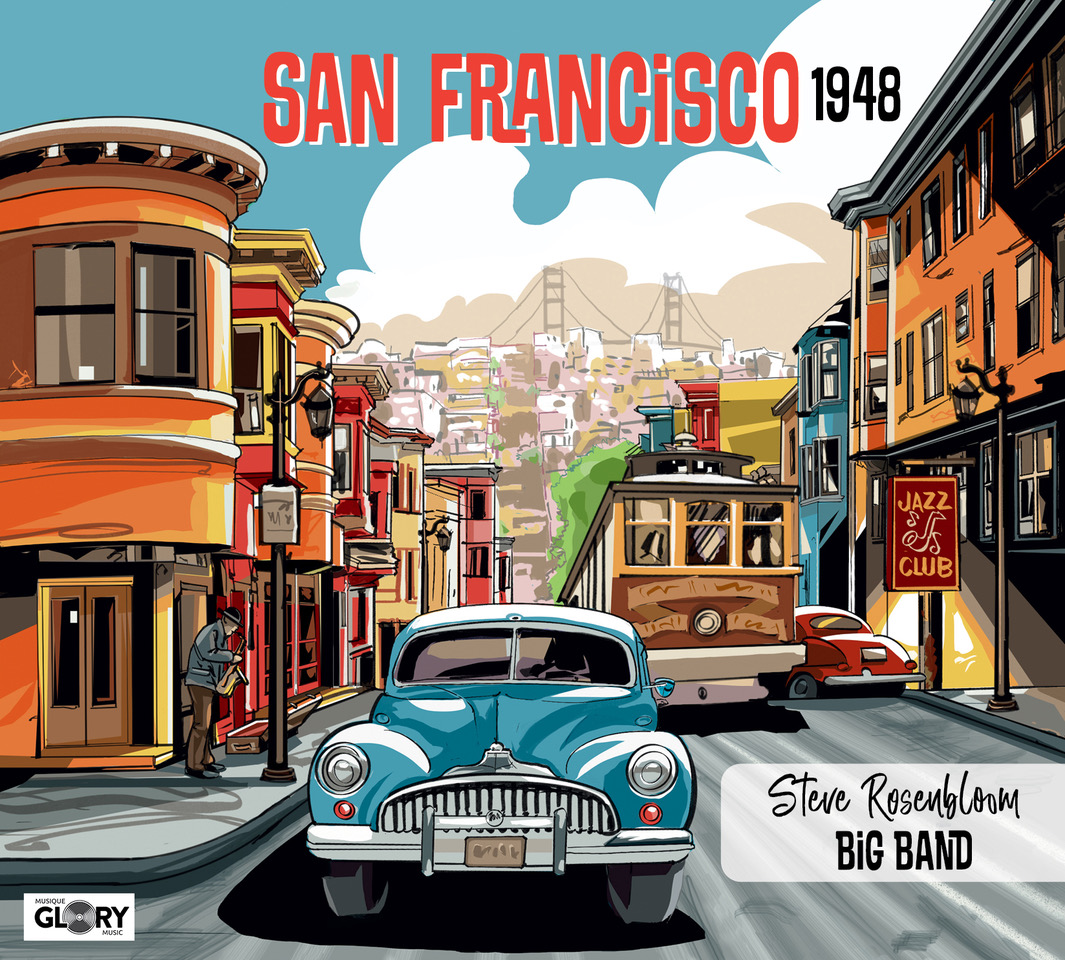
Film noir is a genre shot through with psychological complexity. So it’s unsurprising that the shadowy movies of the postwar era would appeal to saxophonist and composer Steve Rosenbloom, who is also a psychologist and psychoanalyst. A few tunes on his recent big band album, San Francisco 1948, tip a fedora to film noir and the city that frequently served as a backdrop, as well as to their moody jazz soundtracks. On the melancholy “Mosley,” Allison Burik’s lonely alto wanders through desolate, fog-shrouded streets, coasting over the 16-piece ensemble’s tapestry of brass, reeds and rhythm, and Thomas Morelli-Bernard maintains the wistful mood on his ensuing solo. While on the faculty at McGill University in the 1980s, Rosenbloom began writing jazz compositions, some of which were featured in concerts by the McGill University Big Band. He had also started gigging on the Montreal jazz scene, has recorded as both sideman and leader and has had his compositions recorded by other artists. San Francisco 1948 comprises music Rosenbloom had written but never recorded, as well as newer compositions, and features sterling arrangements from trombonist Chris Smith and tenor saxophonist Michael Johancsik, both of whom play on the record.
Steve Khan “Dreamsville” single (Blue Canoe)
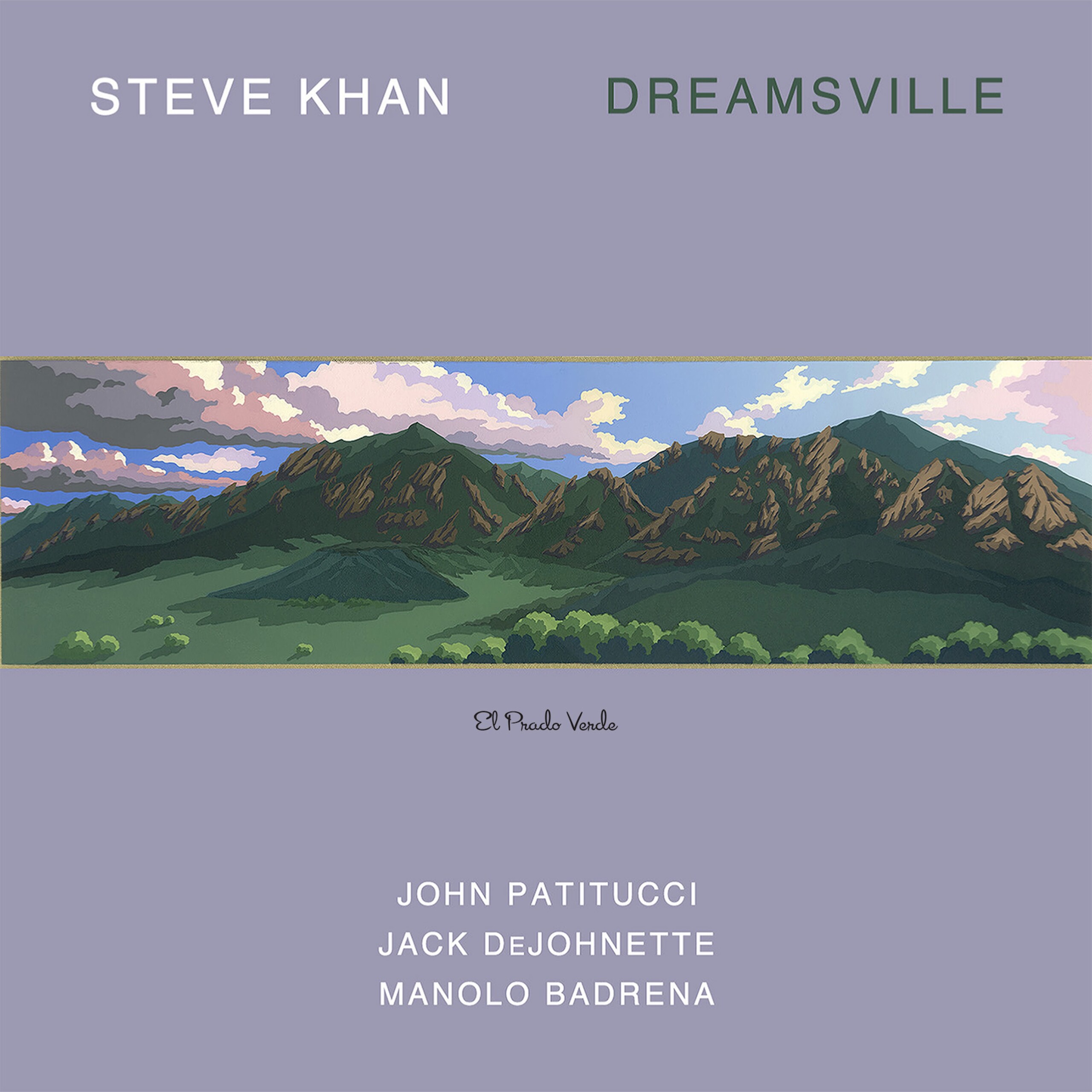
Guitarist Steve Khan had assembled an allstar lineup for his 2005 recording The Green Field — bassist John Patitucci, drummer Jack DeJohnette and percussionist Manolo Badrena. The last track the ensemble laid down for the session, the gorgeous Henry Mancini composition “Dreamsville,” was cut for space along with a version of McCoy Tyner’s “Blues for Ball.” While the Tyner tune made it onto Khan’s 2007 release Borrowed Time, “Dreamsville” once again was put on the shelf, where it remained for another 20 years. With DeJohnette’s passing last year, Khan decided to release the track via Blue Canoe in honor of his friend and colleague. The drummer’s deft touch adds quiet resonance, his feathery brushes providing ambience alongside Badrena’s unobtrusive percussion. Khan’s warm tone and subtle angularity offer a complex emotional palette — is he communicating contentment, wistful longing, both? — which is echoed by the lush, plummy bass notes Patitucci pulls from the strings of his upright. Concluding with a shimmering cymbal, the introspective cut allows listeners to interpret it as they will. Mancini composed “Dreamsville” for an episode of the 1950s TV series Peter Gunn, and it was subsequently covered by Wes Montgomery and Sarah Vaughan. Khan’s version makes a superb addition to the canon and bids a fond farewell to DeJohnette.
Ben Rosenblum’s Nebula Project “Merengue x Fantasy” The Longest Way Round (One Trick Dog)
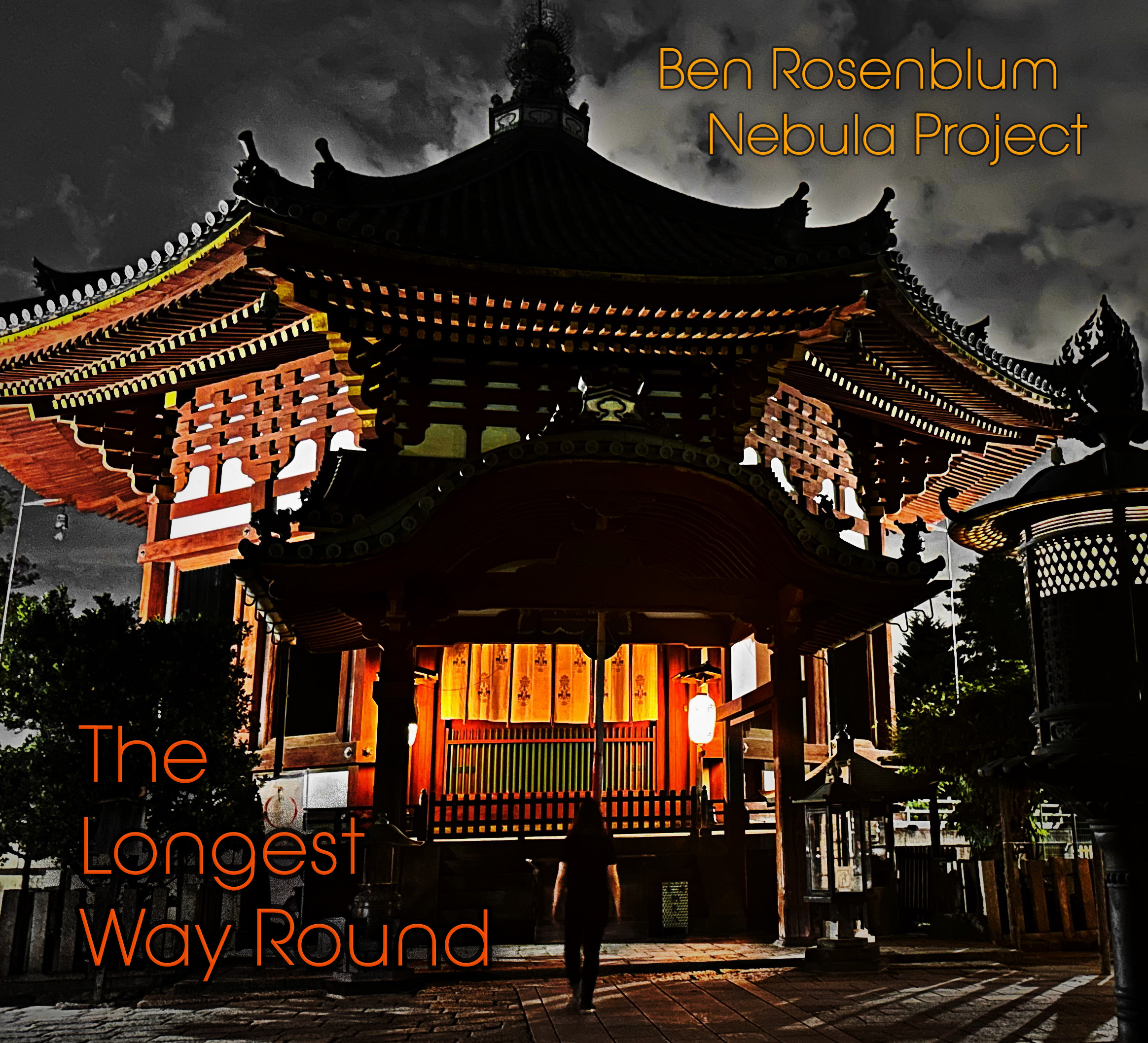
The title of Ben Rosenblum’s new recording, The Longest Way Round, refers to a line from Ulysses: “Think you’re escaping and run into yourself. Longest way ’round is the shortest way home.” Having traveled the globe while touring with Rickie Lee Jones and Catherine Russell, among others, the pianist, accordionist and composer has found truth in the quote from James Joyce’s masterwork. Rosenblum employs sounds spanning various cultures and geographies, a trademark of his Nebula Project, with which he’s recorded two previous albums, and West African, Caribbean, Dominican, neo-soul and hard bop influences flavor various numbers. The opening “Merengue x Fantasy” serves as an invitation to the unfolding party, with driving percussion from Gustavo Di Dalva, Brad Dutz and Nebula drummer Ben Zweig calling dancers out to the street. A horn chorus from trumpeter Wayne Tucker and saxophonist Jasper Dutz ratchets up the excitement, before Rosenblum’s accordion comes to the fore, its signature sound adding another layer of folkloric color. While the rhythms, further propelled by bassist Marty Jaffe and guitarist Rafael Rosa, derive from Dominican merengue, Rosenblum also utilizes a Japanese pop-inspired chord progression for an irresistibly catchy combination. And, as one might expect from an artist who has toured with the likes of Curtis Lundy, Bobby Watson and Warren Wolf, Rosenblum pays tribute to hard bop pianists Horace Silver and Mulgrew Miller on a couple of album cuts.
Dotsero “Lighthouse in the Rockies” Orestod Sojourn (Cinderblock)
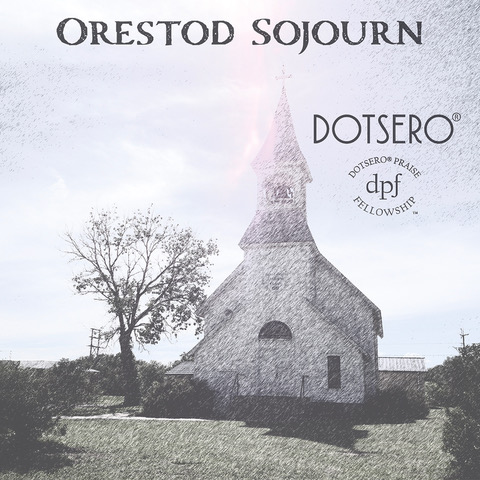
Brothers Stephen and David Watts formed the smooth jazz powerhouse Dotsero more than 40 years ago, taking their band name from a small mountain town in Colorado. While David retired from the group, saxophonist and composer Steve Watts remains at the core of Dotsero, and this past year released Orestod Sojourn, a studio album long in the making. Watts began the project in 2018, assembling new material and old favorites from the band’s catalog. Among the latter is an introspective rendition of Dotsero’s “Lighthouse in the Rockies,” which first appeared on the group’s 1991 release Jubilee and again on a live album from 2007. The latest version is more meditative, with Watts’ warm-toned sax floating beatifically over a bed of acoustic piano, bass, drums and synth strings, and was most likely inspired by the natural beauty of the region. The album’s title references Orestod (Dotsero spelled backwards), an unincorporated area at the north end of the Dotsero Cutoff, where a railway connection was installed at the confluence of the Eagle and Colorado rivers. Watts’ sojourn began in this area, and its course is still being charted.
Eric Hilton “The Dharma Lovers” A Sky So Close (Montserrat House)
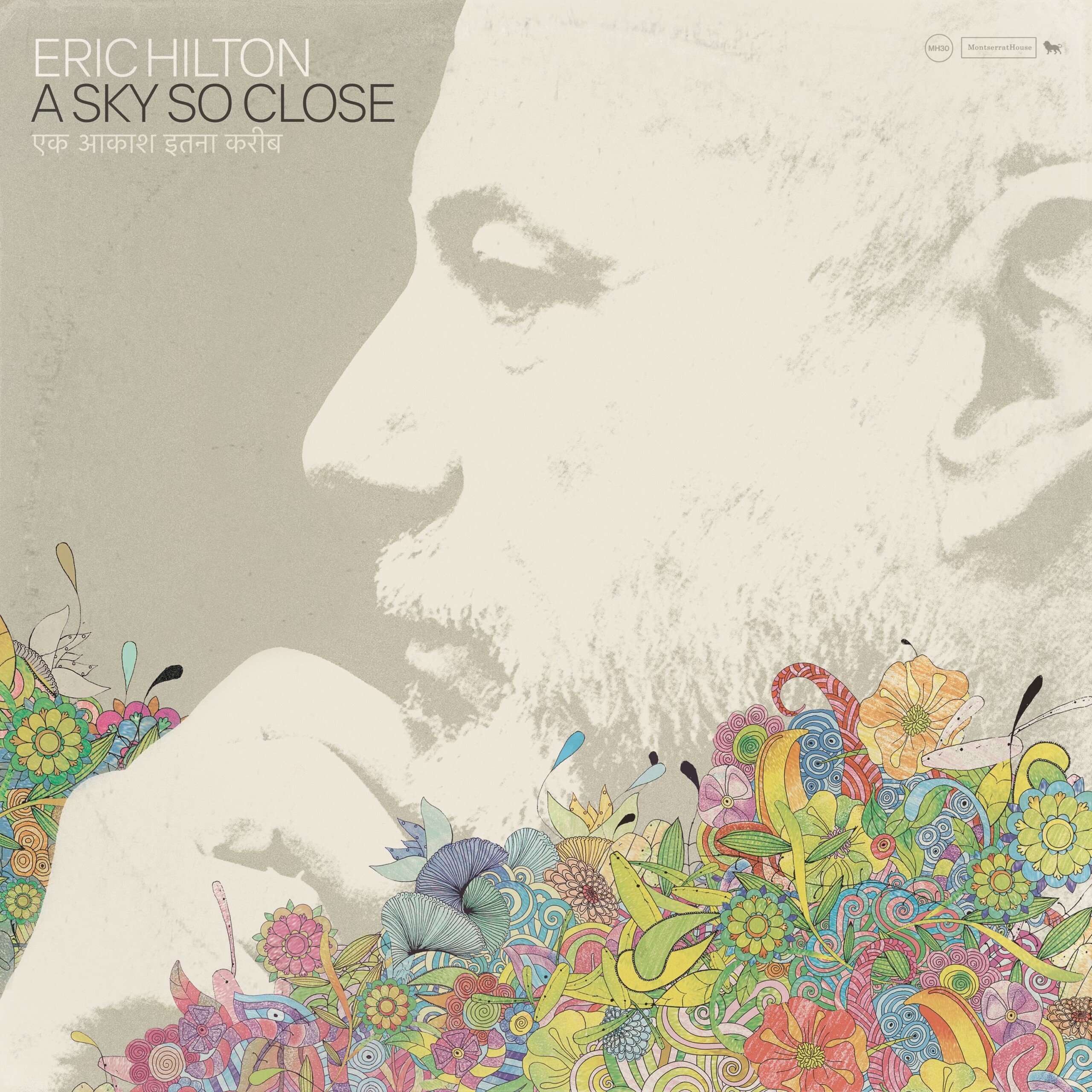
As a founding member of Thievery Corporation, Eric Hilton created a signature blend of acid jazz, dub and hip-hop with Brazilian, Indian classical and Middle Eastern influences; that heady concoction set a template for “trip-hop” in the mid-1990s. The bassist and producer continues to refine that model on recordings under his own name, including the new A Sky So Close. Once again, Hilton incorporates samples into the mix, augmenting the music he crafts in the studio with a few select comrades. Among them is vocalist and longtime Thievery collaborator Natalia Clavier, who sings in Hindi and brings a fevered sensuality to the track “The Dharma Lovers.” Shimmering sitar adds redolent spice, weaving through a tapestry of deep bass grooves and down-tempo beats. Liquid, lush and spacious, the ambience is further flavored with reverberant guitar, twinkling keyboard textures and synth orchestration, while Clavier’s inviting vocals echo as if in a dream.
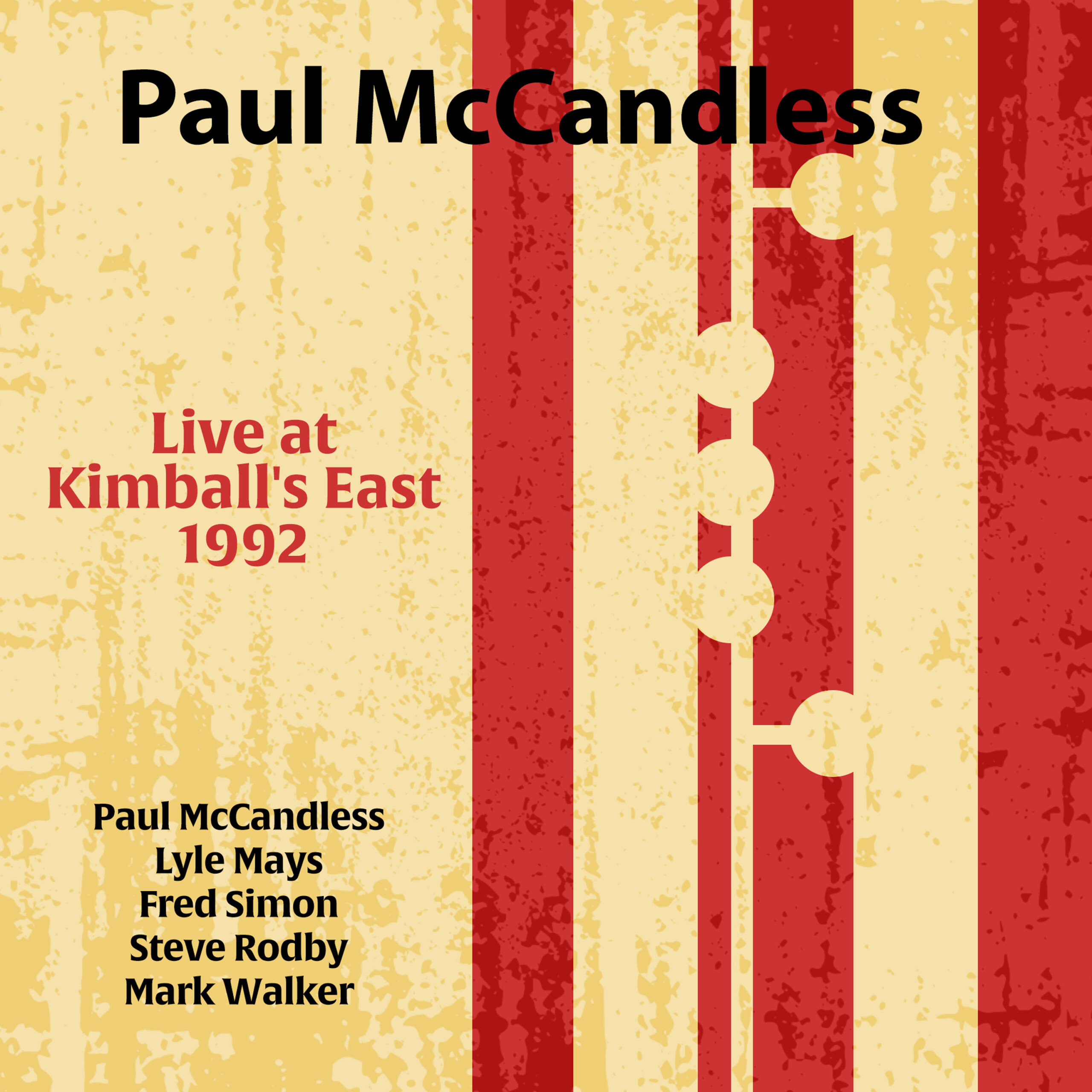
Paul McCandless Quintet “Hard Eights” Live at Kimball’s East 1992 (Moosicus)
Paul McCandless has lent his multi-instrumental talents and deep soulfulness to some indelible music over the decades. In the late ’60s, he was a member of the Paul Winter Consort; in the ’70s, he played with Oregon; and in the the early ’80s, he performed with Jaco Pastorius’ Word of Mouth. McCandless has also led ensembles under his own name, including the one he put together for his 1992 release Premonition. The allstar group — with pianist Lyle Mays, keyboardist Fred Simon, bassist Steve Rodby and drummer Mark Walker — toured behind that album, playing the Montreal Jazz Festival that summer, as well as three nights at Kimball’s East in the Bay Area. The latter would have been lost to the ages, but McCandless discovered a tape of the performances in his archives and realized he had something special. Captured live on stage, the group displays a remarkable synergy on tracks such as a 12-and-a-half-minute read of the Mays composition “Hard Eights.” The pianist kicks off the tune on a spiky, boppy, Monk-like note in duet with Walker’s masterful drumming. Then, on a dime, Mays churns a Latin groove, underlined by Rodby’s bass propulsion, and McCandless’ soprano sax takes the tune soaring to another altitude. Switching to sopranino, the leader continues his joyful upward trajectory, anchored by the rock-solid rhythm section. Once again, Mays enters the spotlight with a mid-song solo that builds in intensity from introspective to positively exuberant. Rodby and Walker provide thrilling accompaniment, and the excitement spills over into Walker’s muscular solo. McCandless returns to take the tune to its conclusion, an engaging wind-down to a sizzling performance that, fortunately, was captured for posterity.