

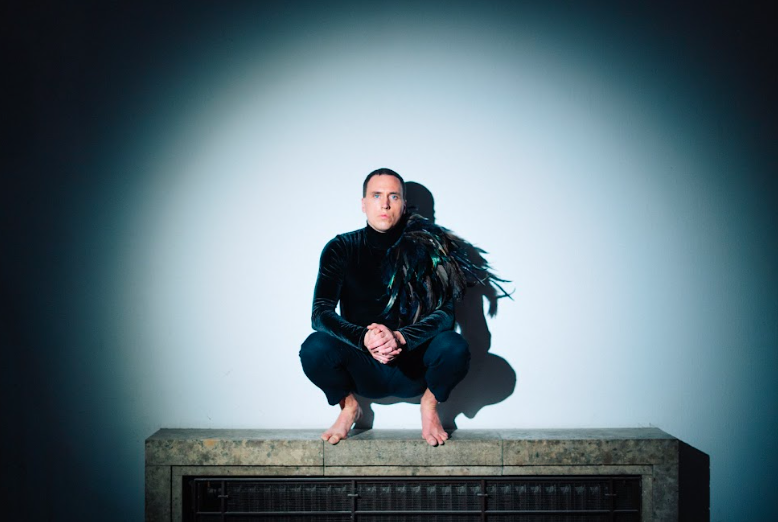
Martin Kohlstedt carves out a genre of his own with his seventh studio album Kluft, out on May 22nd
Long positioned between neoclassical composition, electronic music, and improvisation, Kohlstedt continues to expand beyond categories – merging cinematic sound design, symphonic thinking, jazz sensibility, synthesis, and spontaneous performance into a living, breathing sonic system. His work draws equally from concert halls and club spaces, from film scoring and experimental electronics, but is equally shaped by the logic of improvisation: music that is always in motion, never fully fixed.
On Kluft, he moves closer than ever to song form and direct composition, while keeping improvisation at its core. Built on the modular foundations of his earlier work, the album opens into a more immediate musical language – where structured ideas and spontaneous invention constantly reshape one another. Jazz-like responsiveness runs throughout: harmonic shifts feel conversational, rhythms breathe, and melodic fragments evolve as if discovered in real time. The result is an album marked by quiet melancholy, curiosity, and a constant sense of unfolding.
The title Kluft – German for a fissure, gap, or dividing space – frames the album’s central idea: the in-between. These are pieces suspended in transition, where states of sound and thought are continually negotiated. Kohlstedt treats these liminal spaces almost like improvisational fields: thresholds where direction is not given, but found.
With its meticulous production and seamless integration of acoustic, electronic, analog, and improvisational performance elements, Kluft redefines what modern classical can be – less a fixed genre than a process of listening, responding, and becoming.
In a fragmented world of algorithms and division, Kluft suggests another possibility: that improvisation itself – listening, reacting, connecting in real time – may be one of the most human forms of expression we still share.