

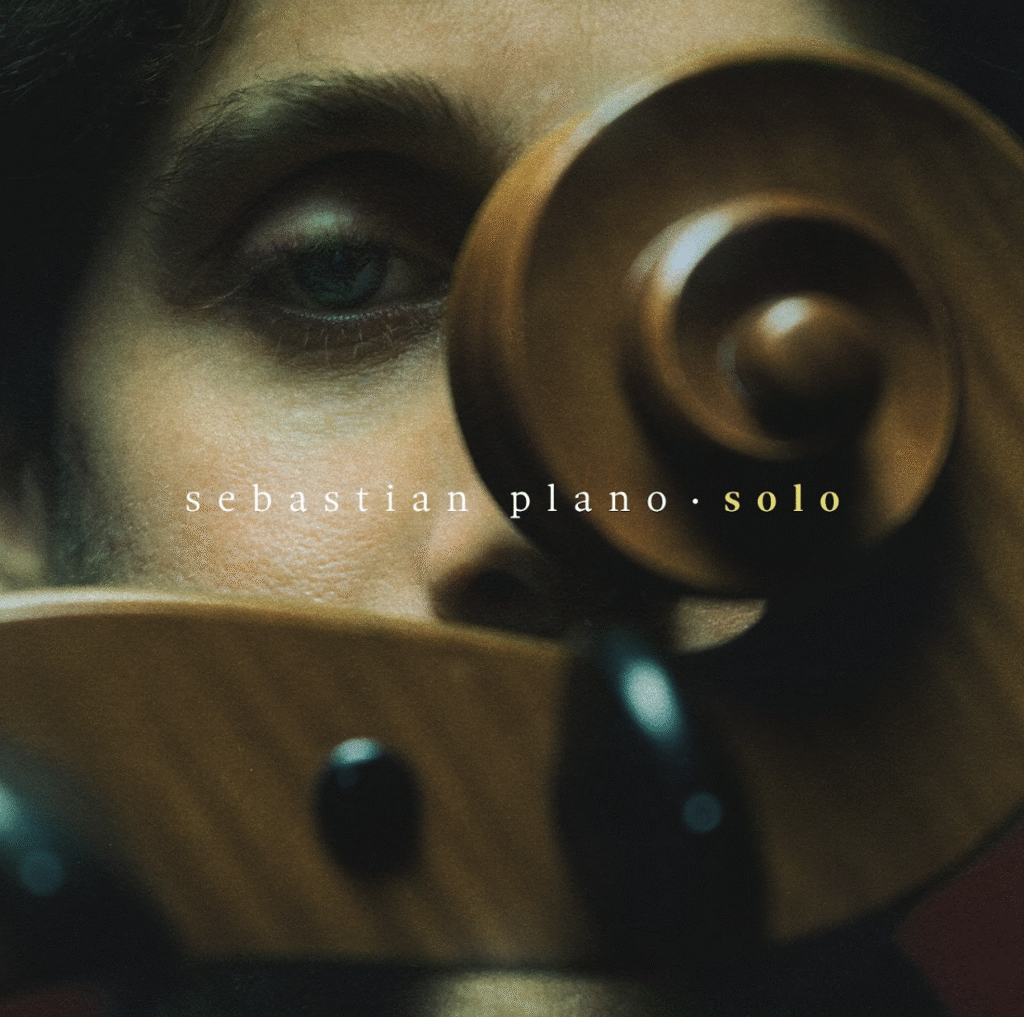
SEBASTIAN PLANO ANNOUNCES NEW STUDIO ALBUM SOLO, OUT JUNE 26
Argentinian cellist, composer, and Grammy-nominated artist Sebastian Plano announces his forthcoming studio album Solo, to be released on June 26. A striking departure from his previous work, Solo is Plano’s first album composed and recorded entirely for unaccompanied cello, an intimate, deeply personal statement shaped by decades of travel, memory, and artistic self-discovery.
“For years I moved through the world with a cello strapped to my back,” Plano reflects, “but with Solo, I finally understood what it means to journey completely alone with it.” That realization emerged after a life spent in motion – from Rosario, Argentina, to Europe and the United States, and now northern Italy, each place leaving a lasting imprint on his sound and identity. The album distills these experiences into a singular voice, stepping away from the layered orchestration and electronics that have defined much of his earlier work.
Plano’s musical path began early. Born into a family deeply rooted in classical and tango traditions, he started playing cello at the age of seven and composing by twelve. His upbringing combined rigorous classical training with an early fascination for electronic music, inspired in part by artists like Vangelis. At seventeen, he left Argentina to study abroad, earning scholarships to prestigious institutions and immersing himself in diverse musical environments. Along the way, he performed in public spaces, collaborated with artists such as Nils Frahm, and navigated challenges that would later shape his artistic resilience and narrative depth.
With Solo, Plano strips everything back to the essence of his instrument. The album is entirely devoted to the cello – no accompaniment, no electronics, allowing every nuance of sound to take center stage. “Recording for a solo instrument is like looking into a mirror,” he explains. “There’s nowhere to hide.” Written and recorded over two years in solitude between Berlin and northern Italy, the work embraces the raw physicality of the cello – the grain of the wood, the breath of the bow, the fragility of each note.
Improvisation plays a central role in the album’s creation. Many pieces began as spontaneous explorations, later refined without losing their immediacy. This balance between structure and freedom gives Solo a sense of living presence – music that feels both composed and discovered in the moment.
While profoundly personal, Solo also reflects a broader musical lineage. The structural clarity of Johann Sebastian Bach’s cello suites resonates throughout, alongside subtle influences from Ralph Towner’s narrative approach and the harmonic language of Alexander Scriabin. These references are not overt but woven into the fabric of the album, informing its emotional and architectural depth.
At its core, Solo is an exploration of identity and belonging. Plano channels a lifetime of movement into a work that is both grounded and searching, embracing clarity through simplicity. With one instrument and one voice, he creates a powerful, introspective document, an album that traces a journey across continents and years, ultimately returning to the self.